


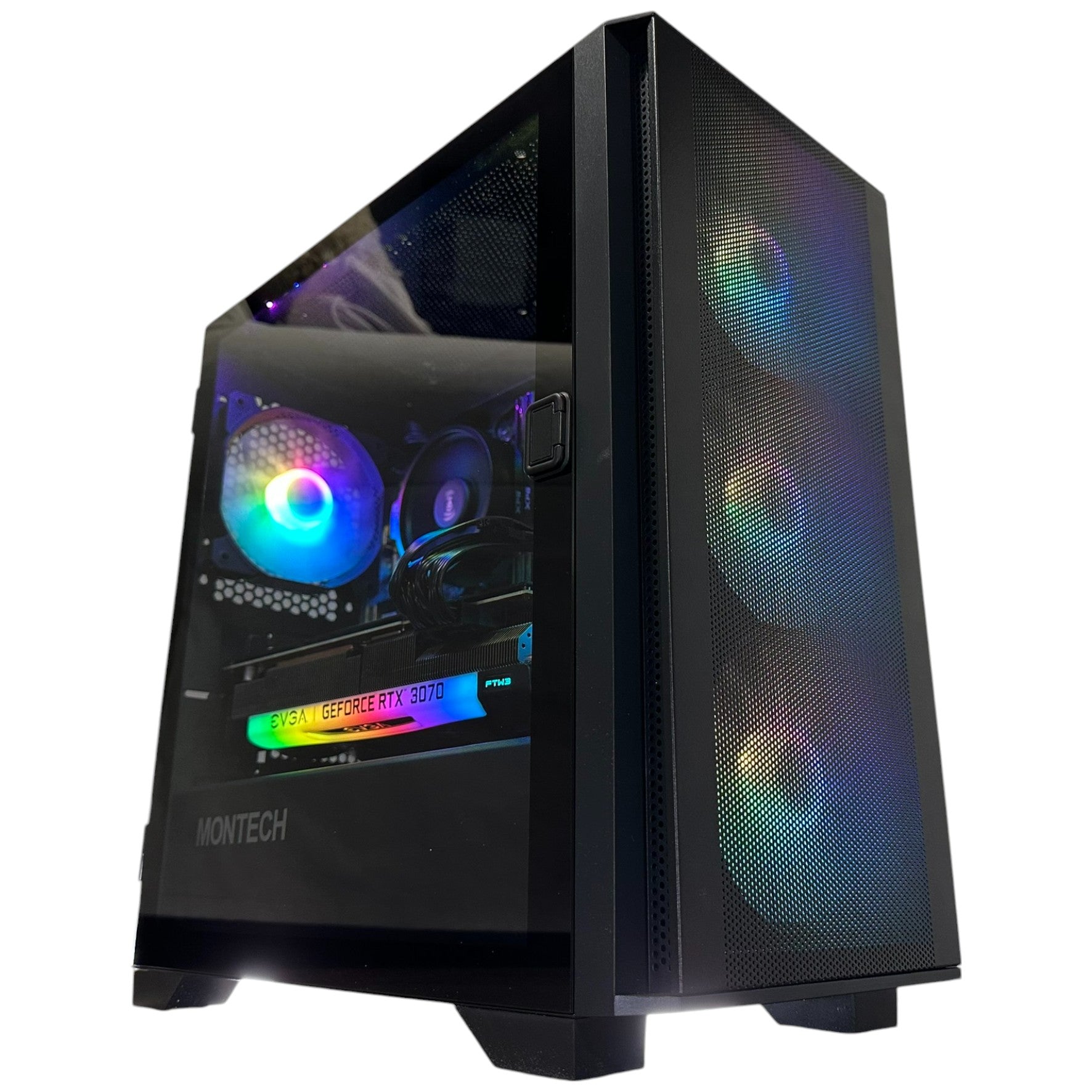
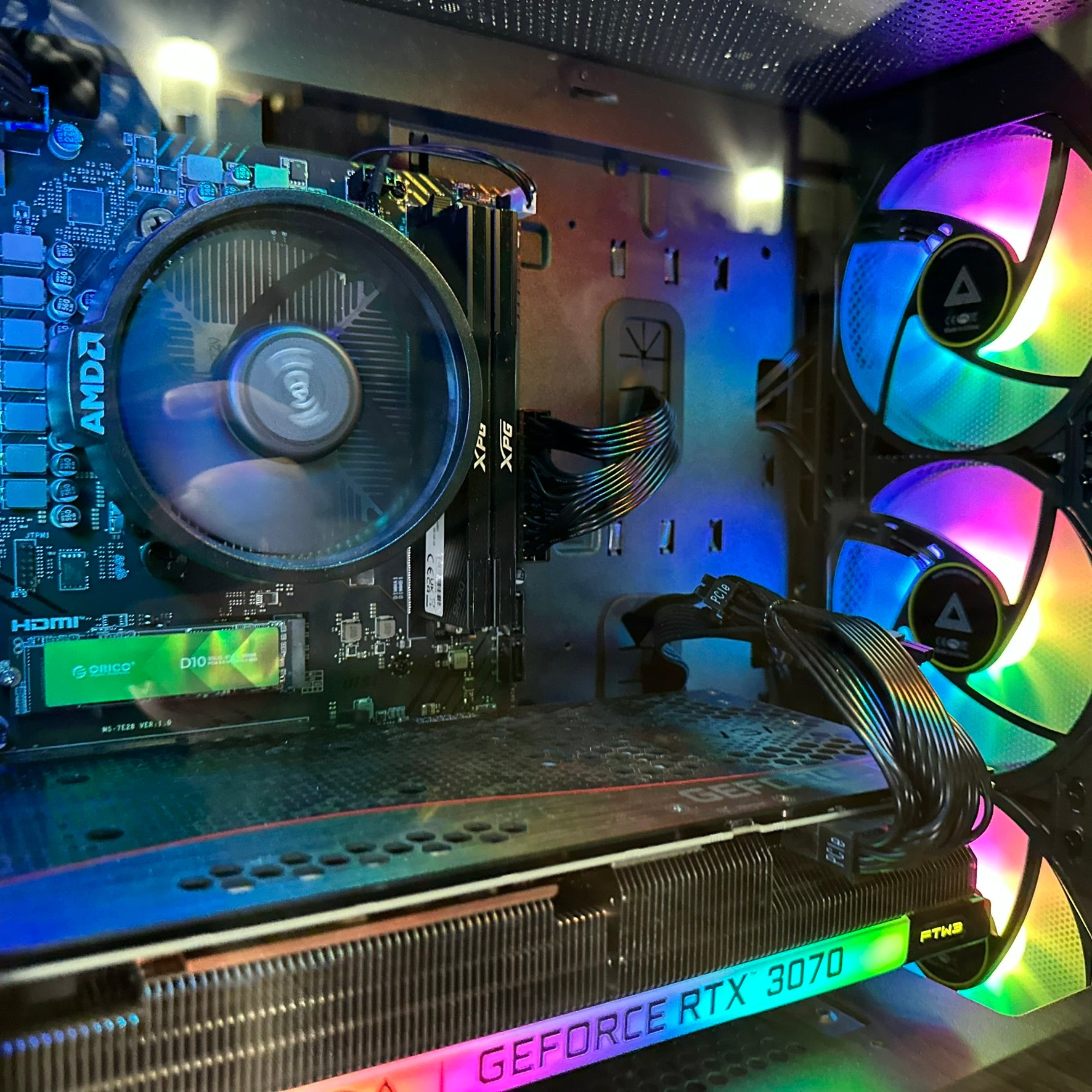
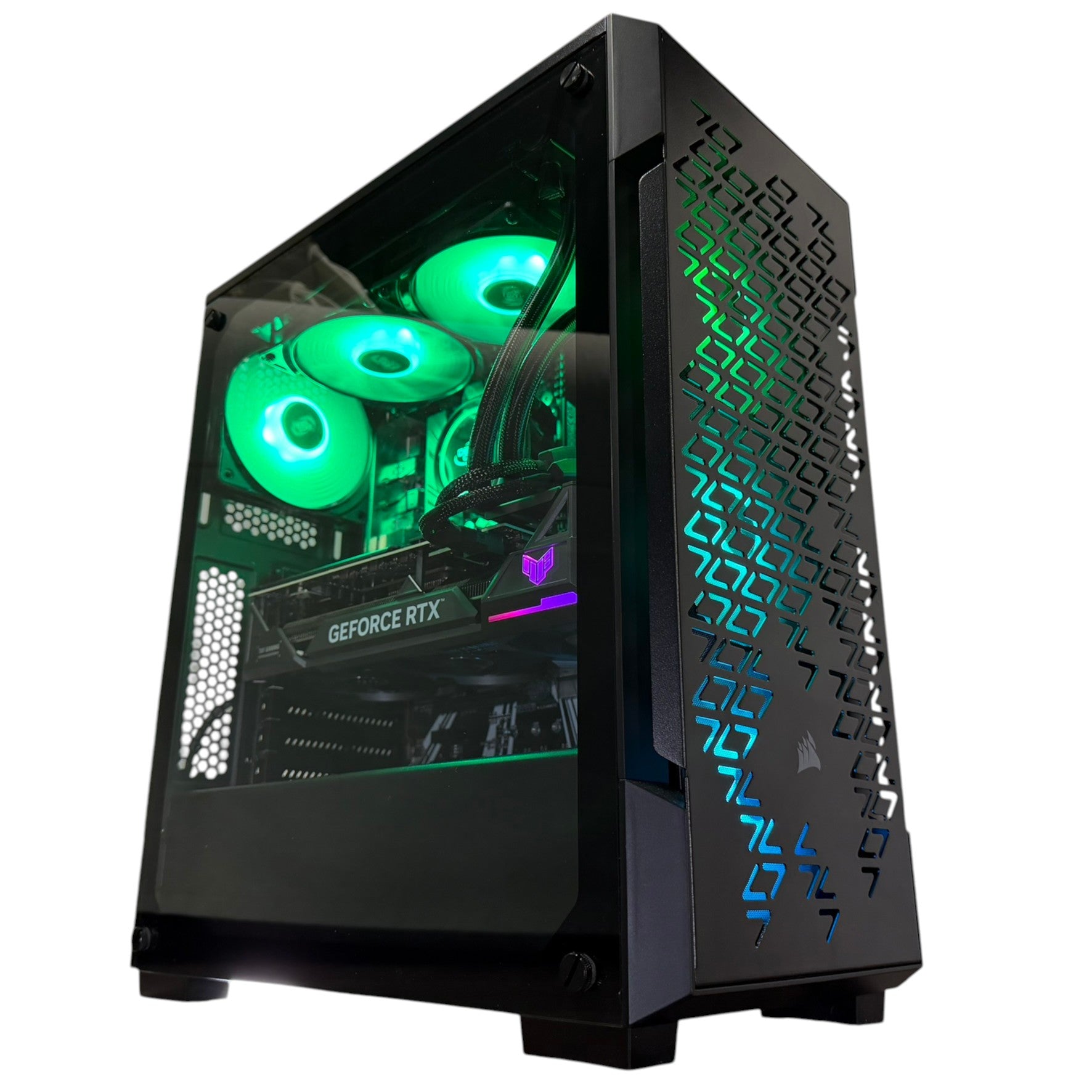

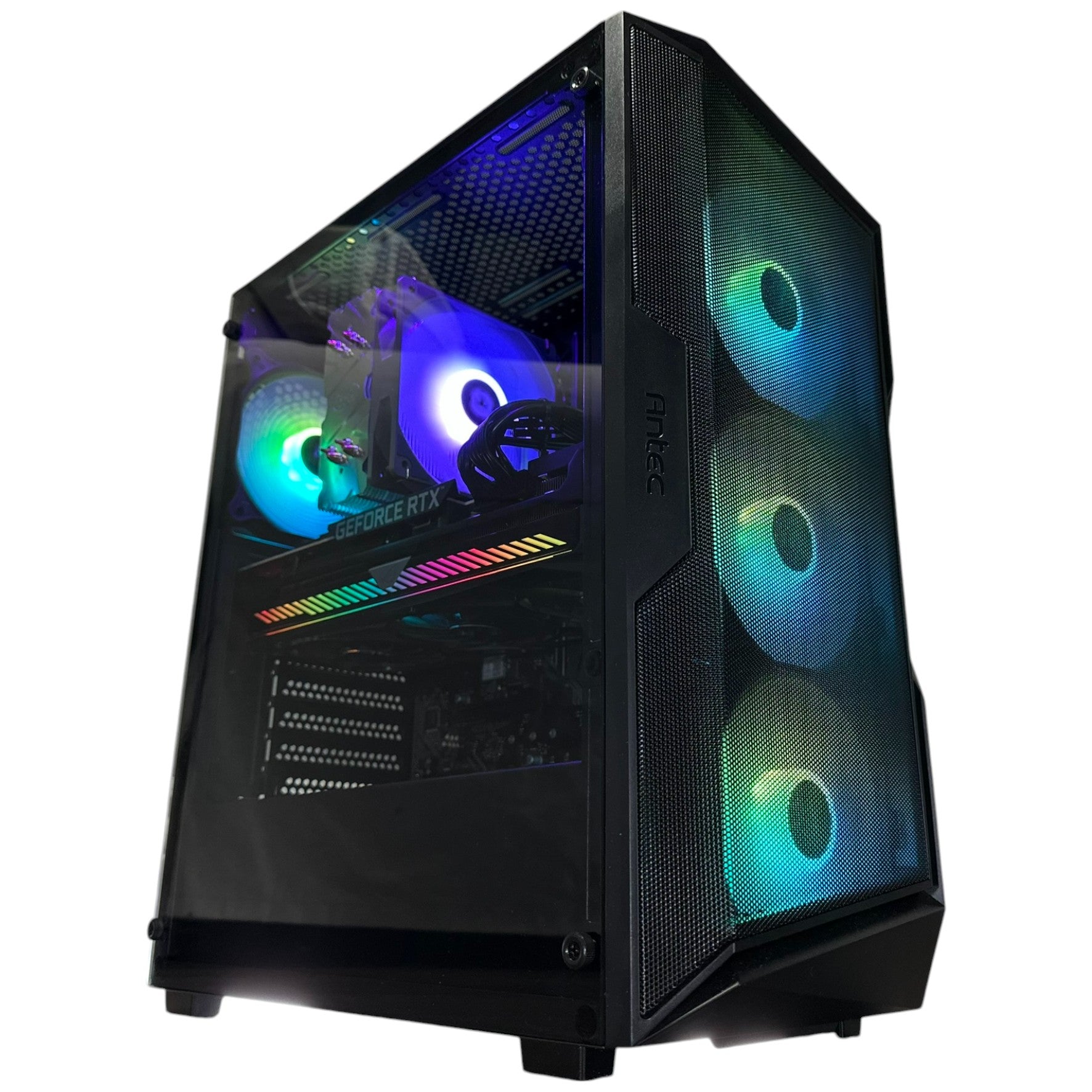
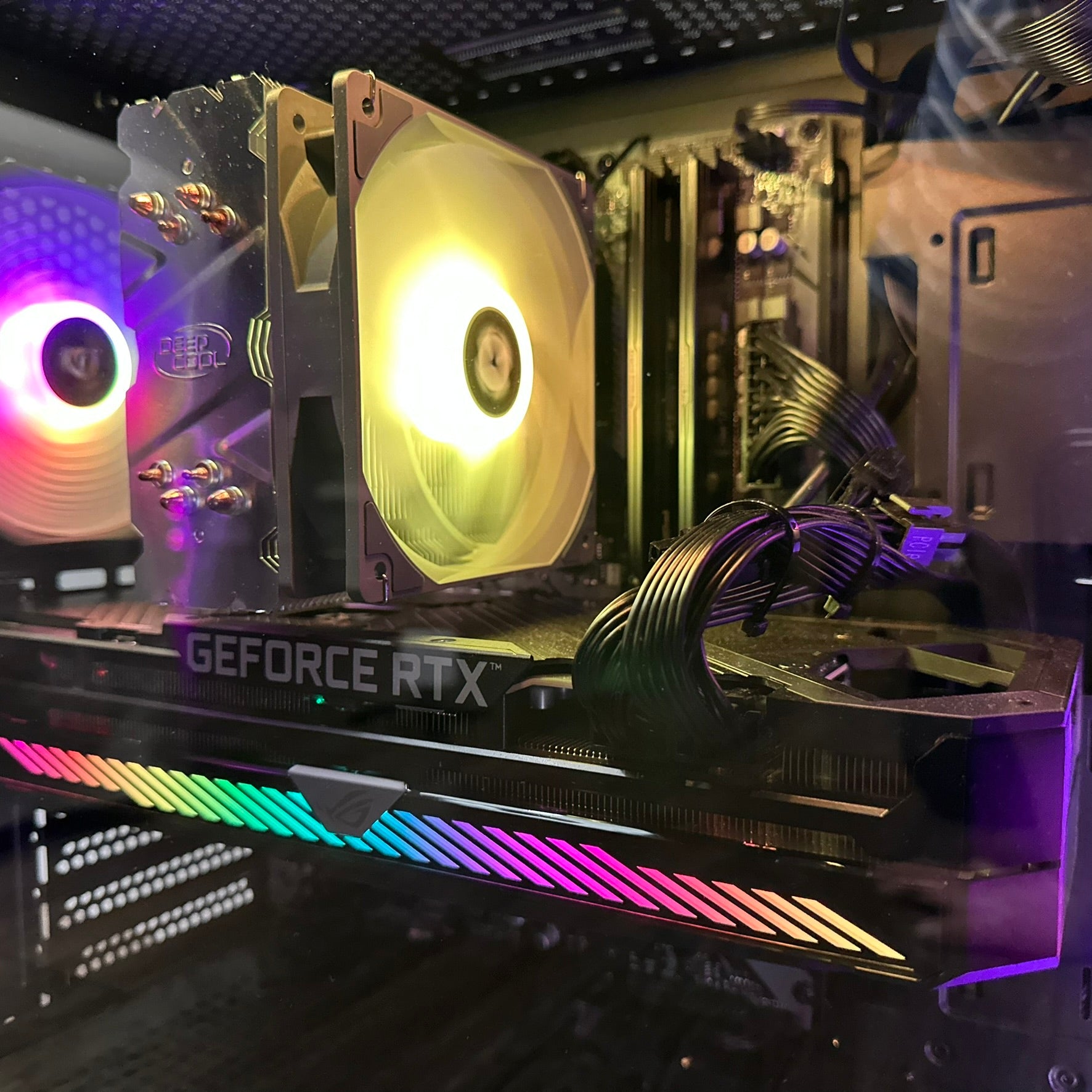
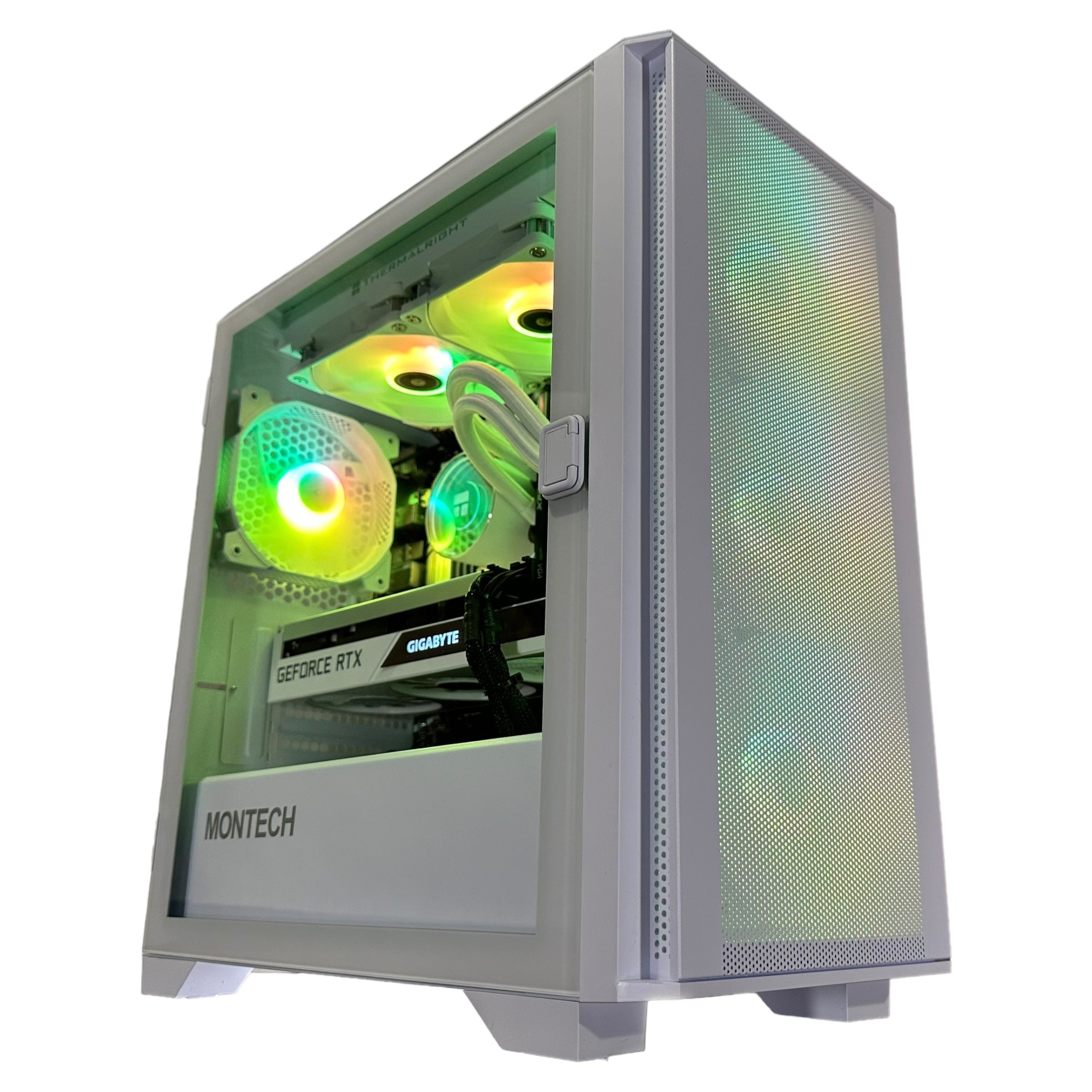
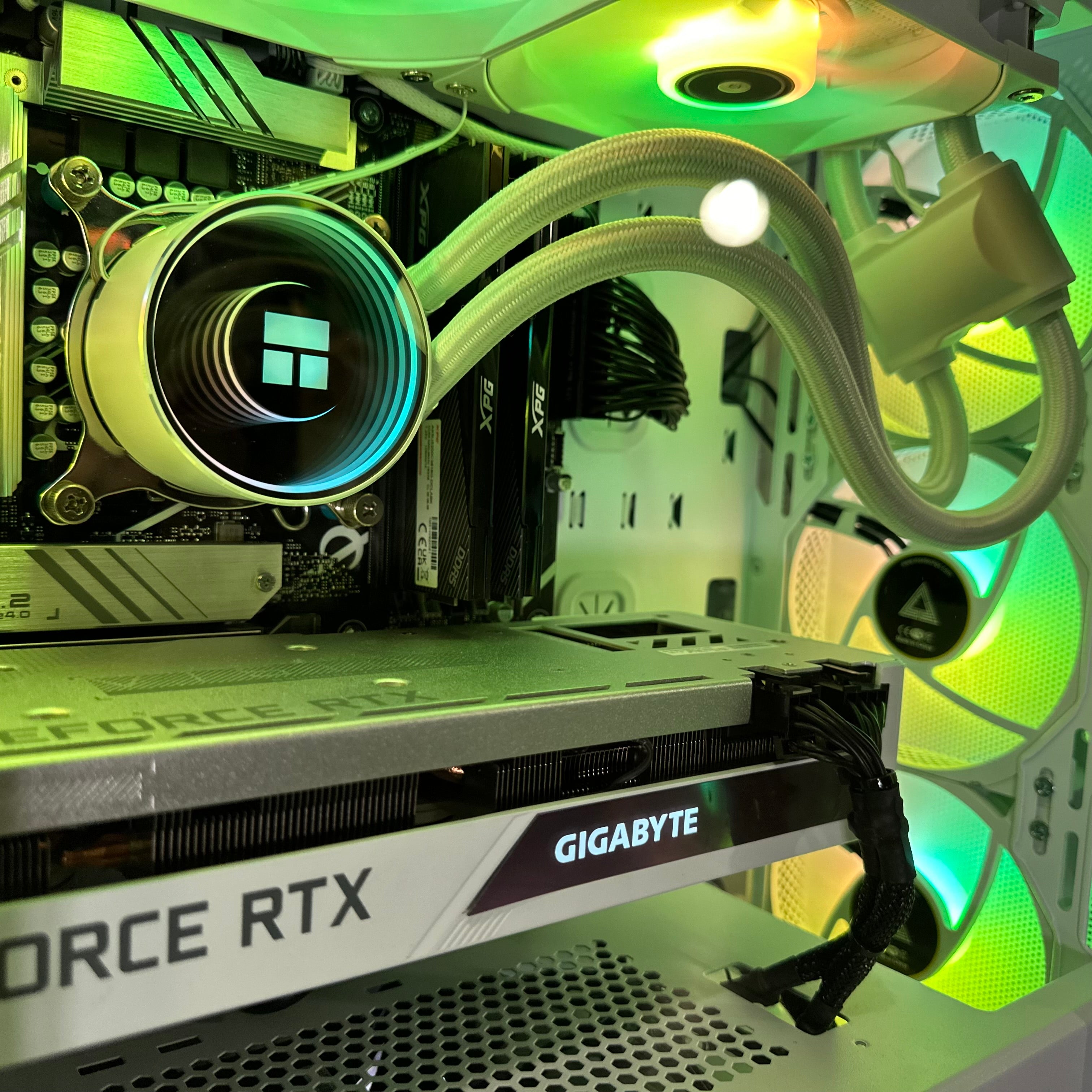
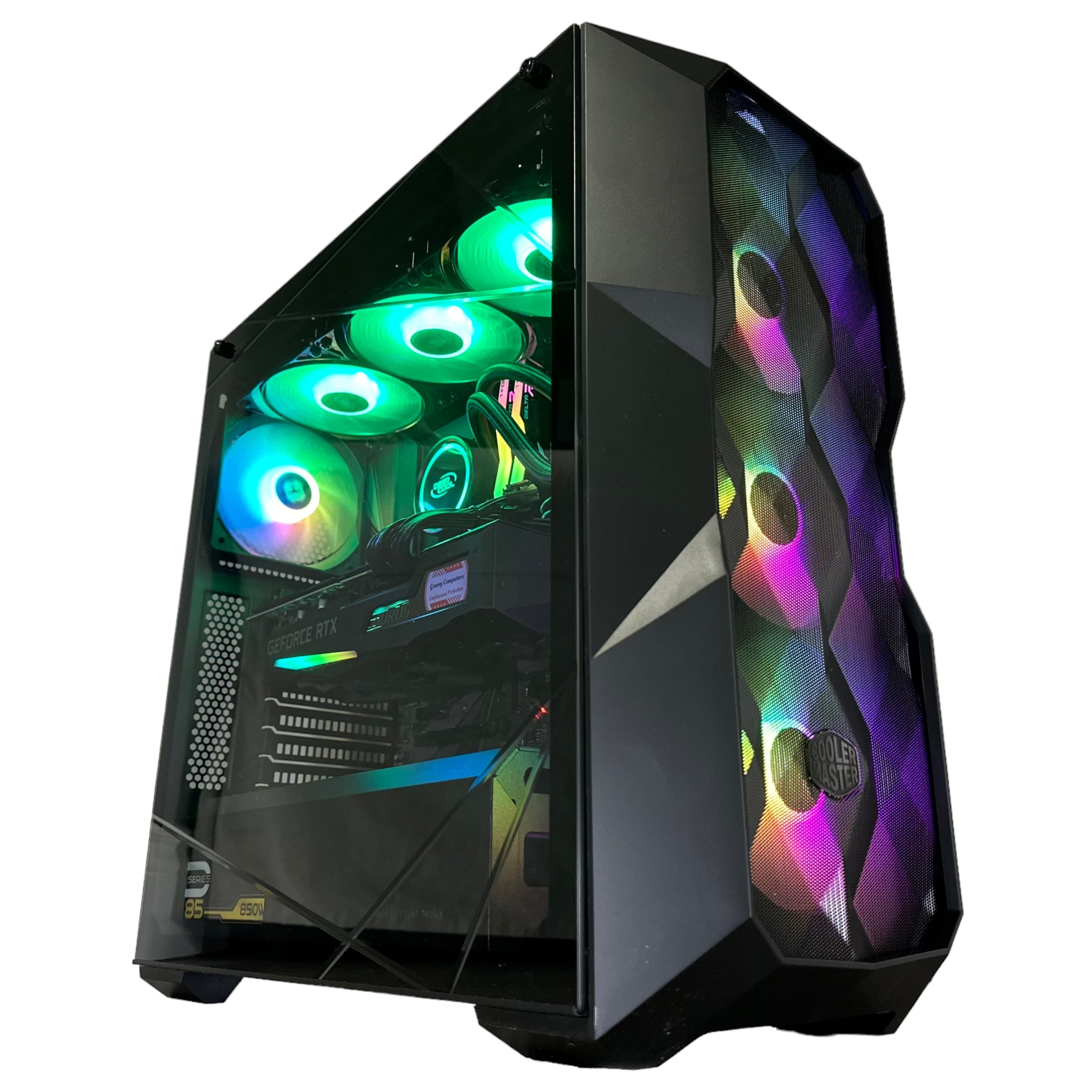
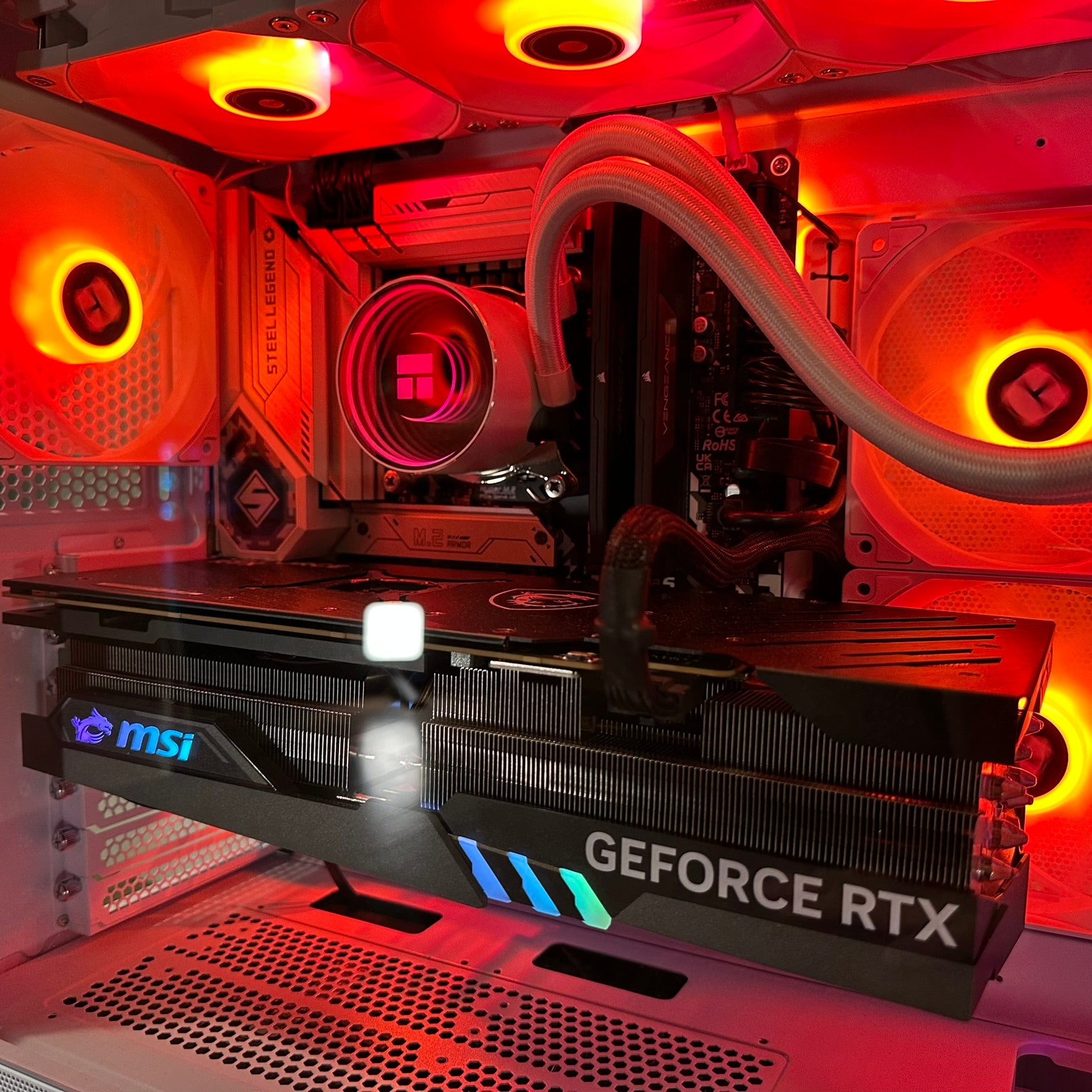
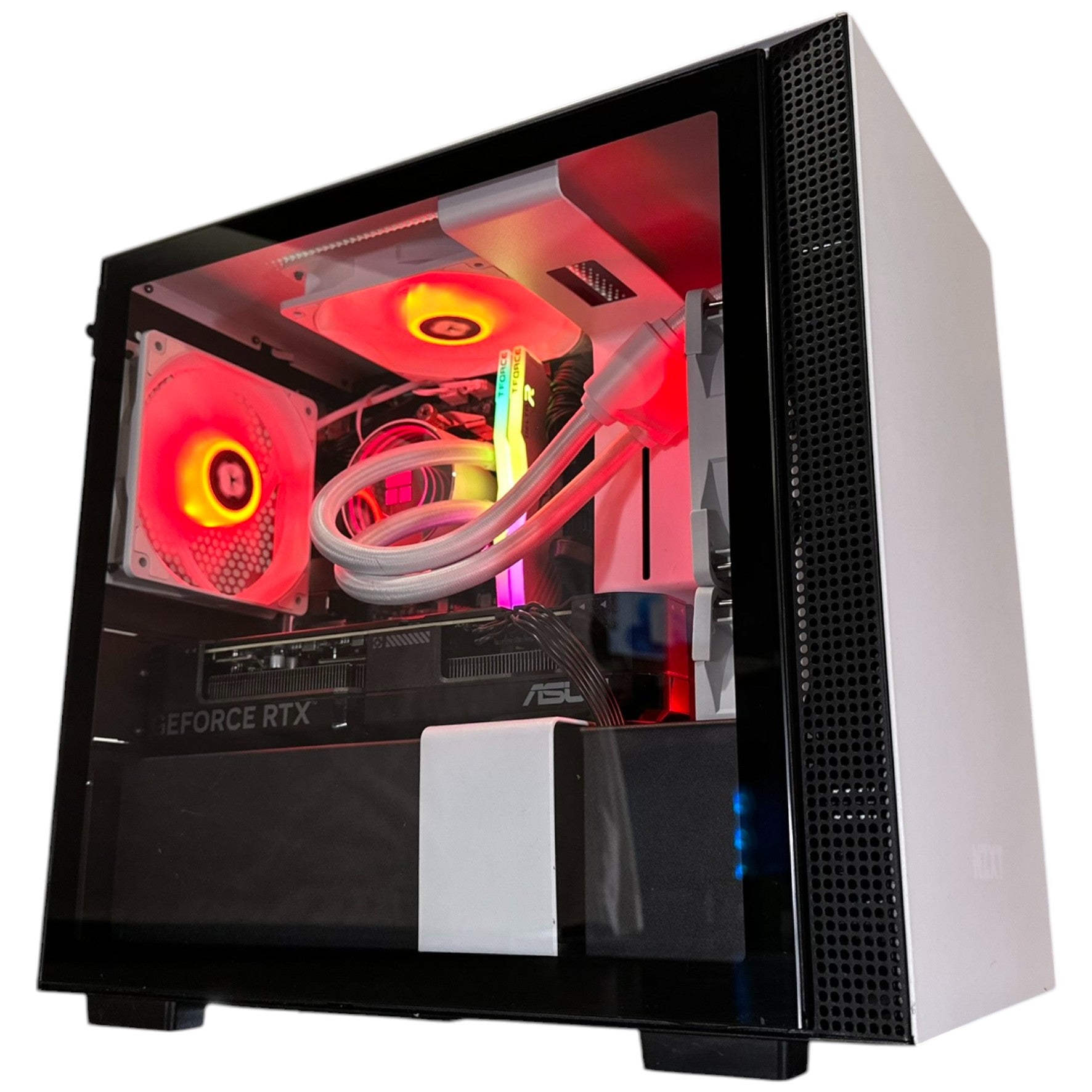
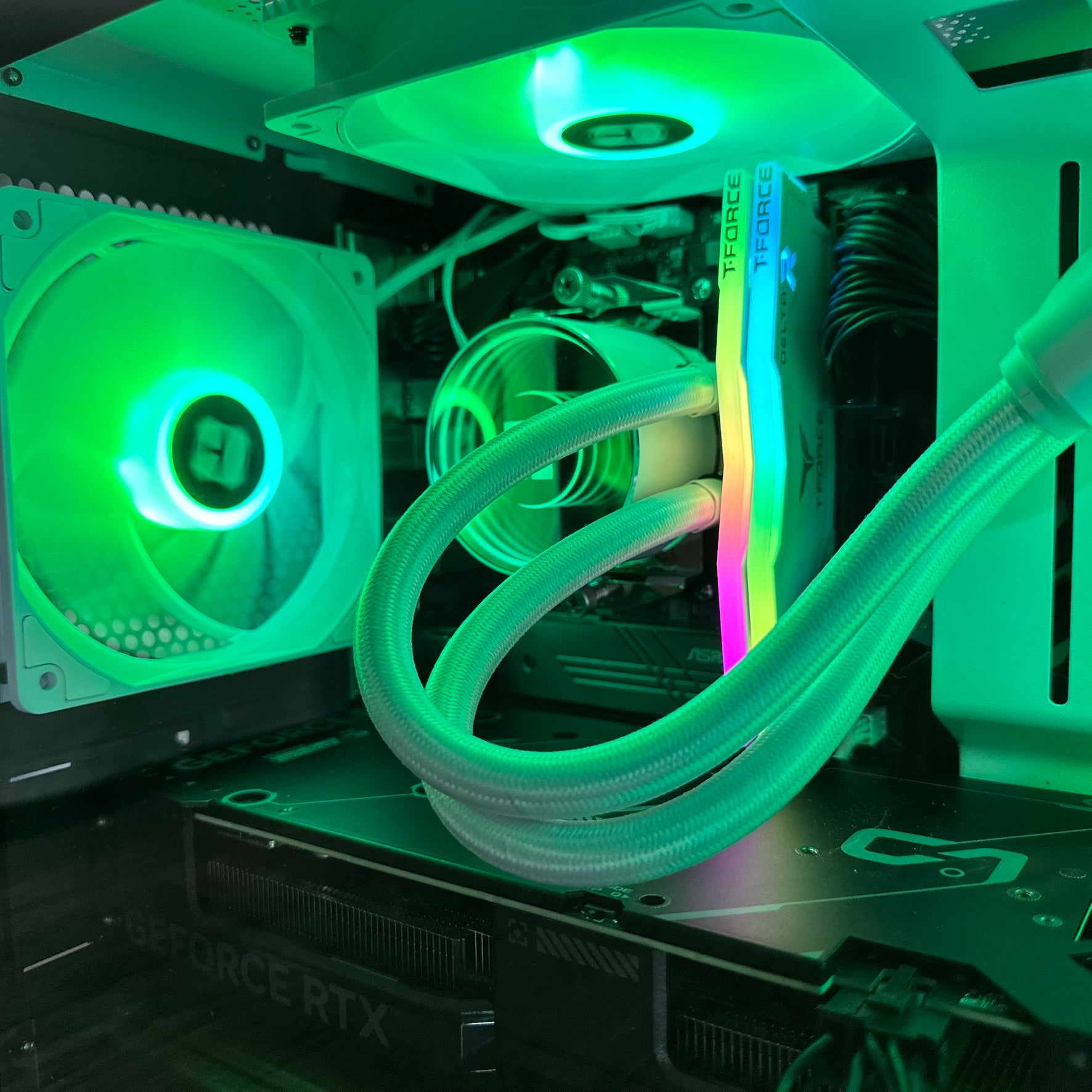
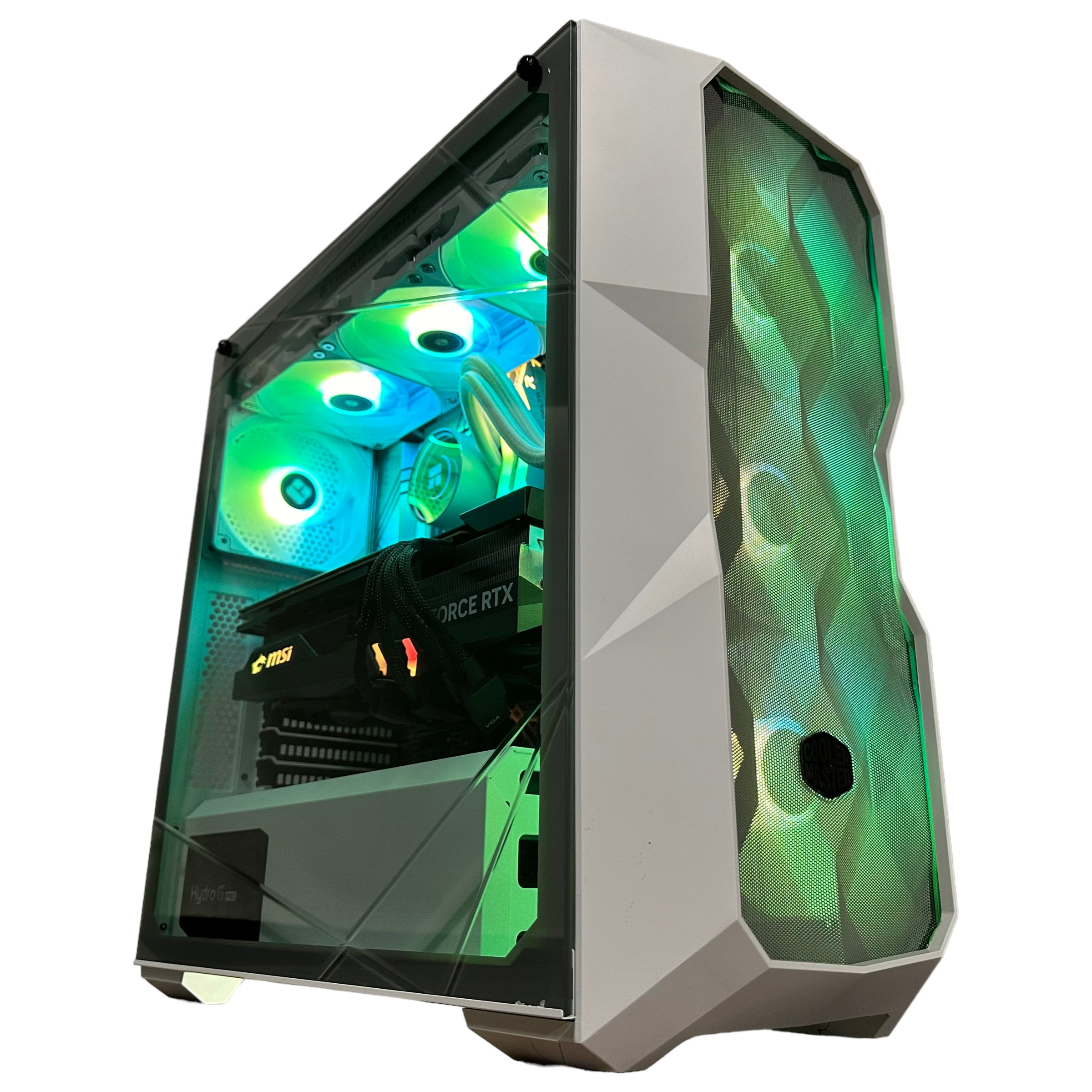
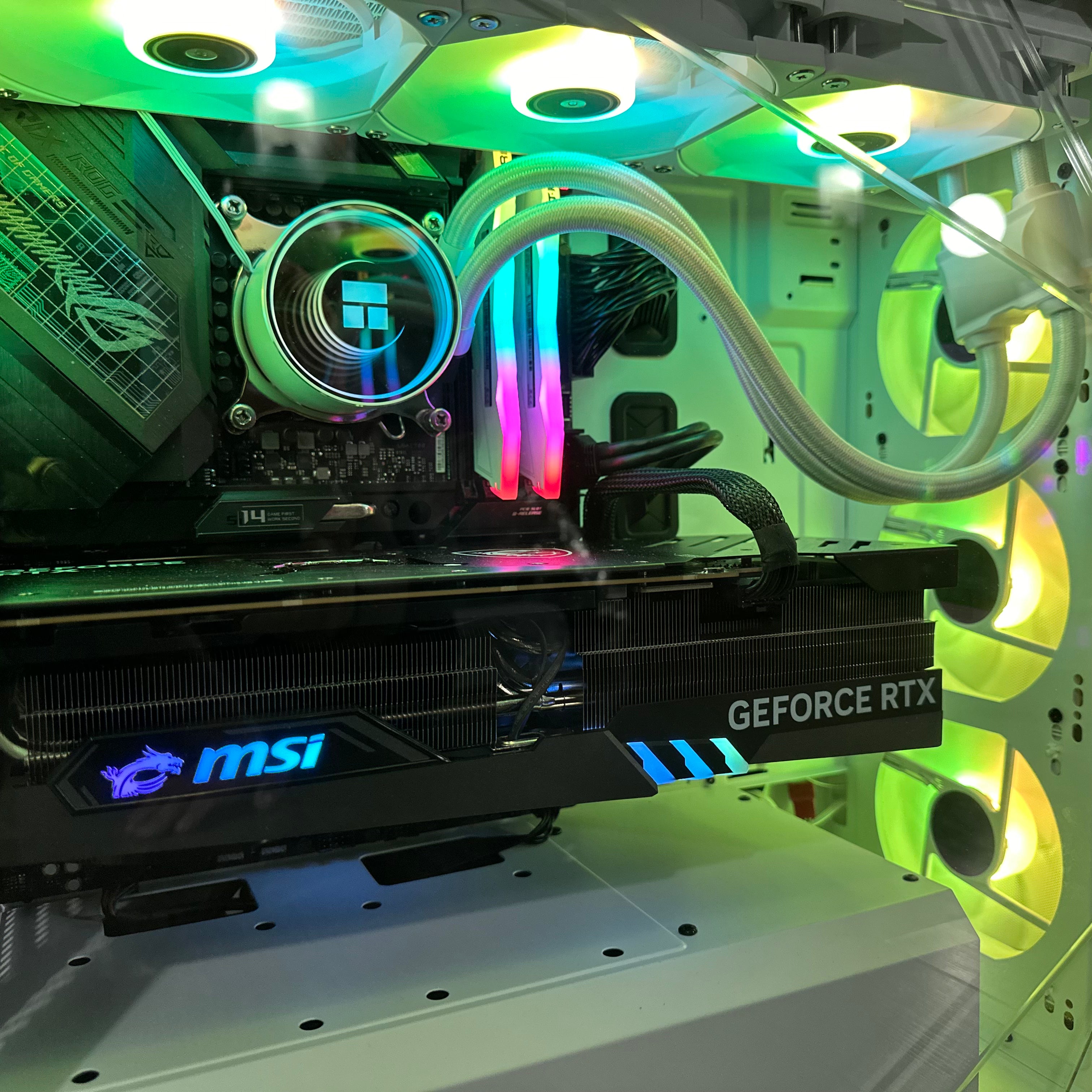
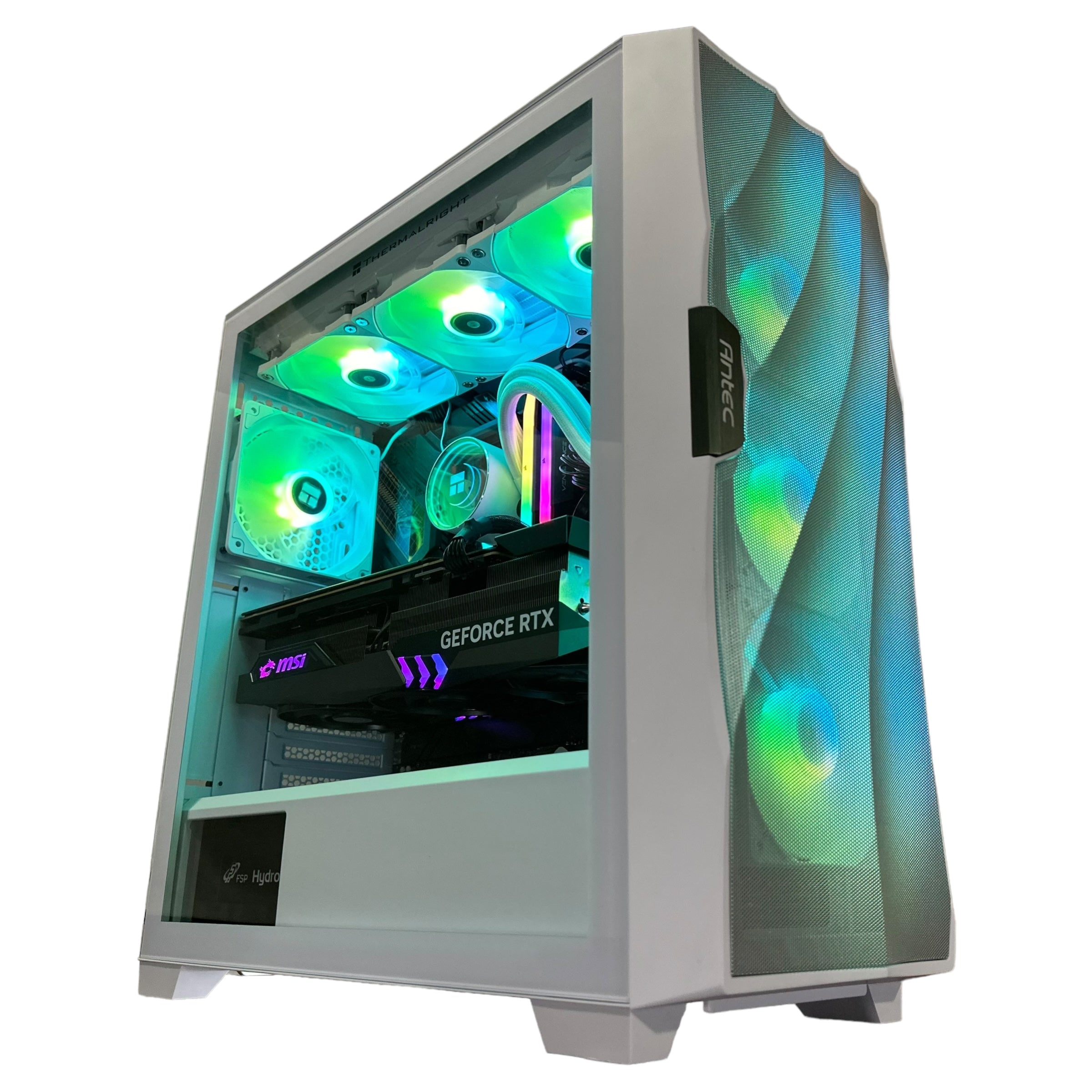

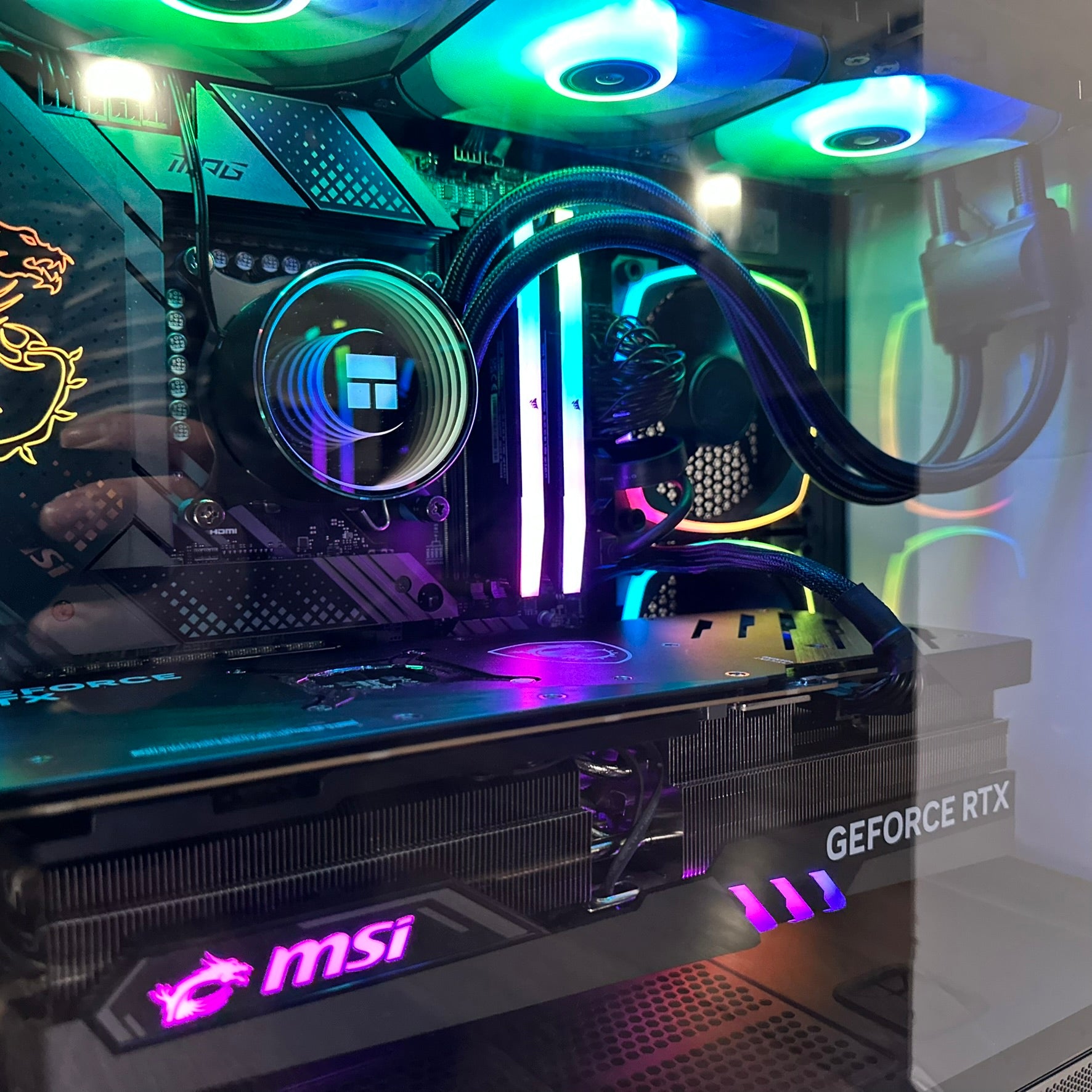
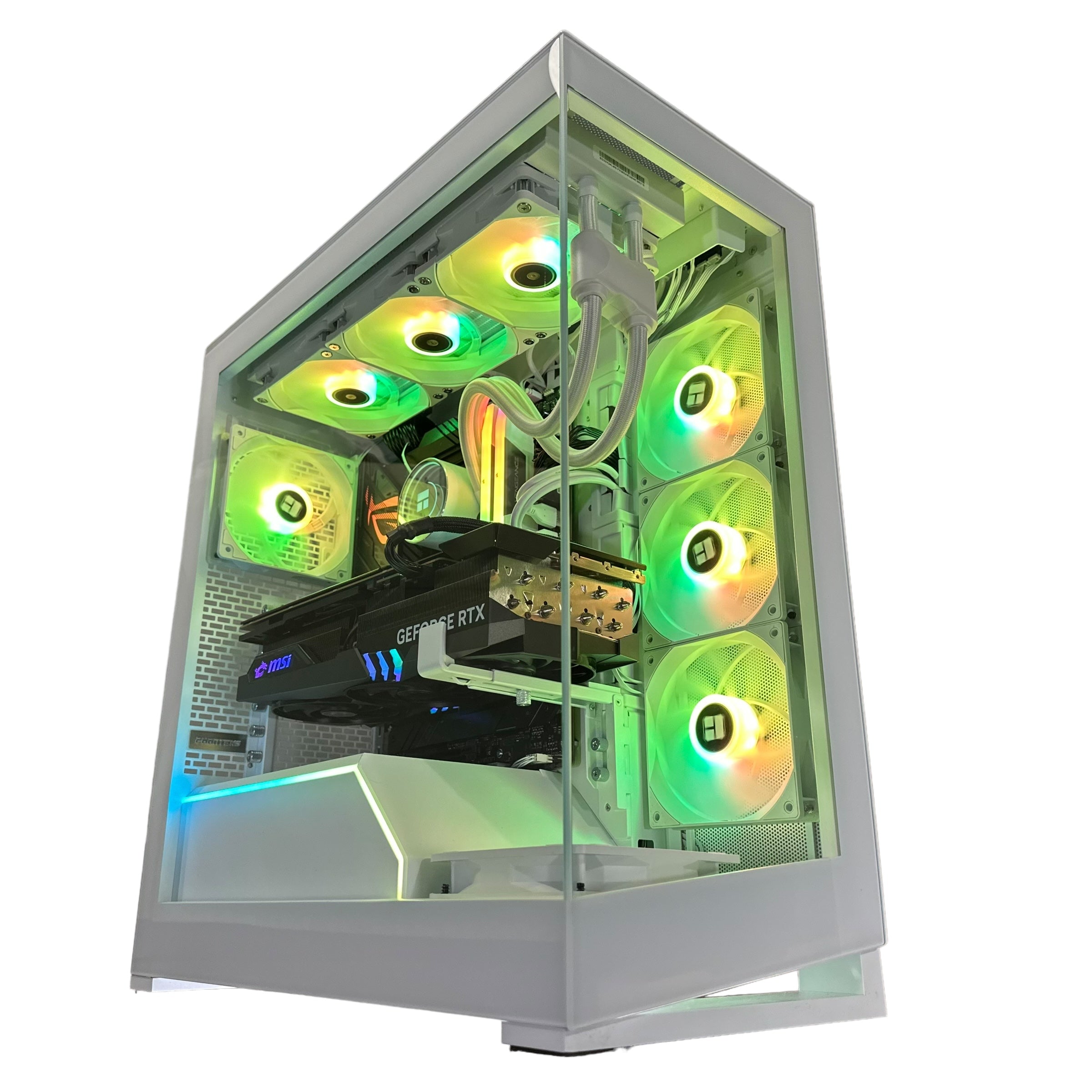
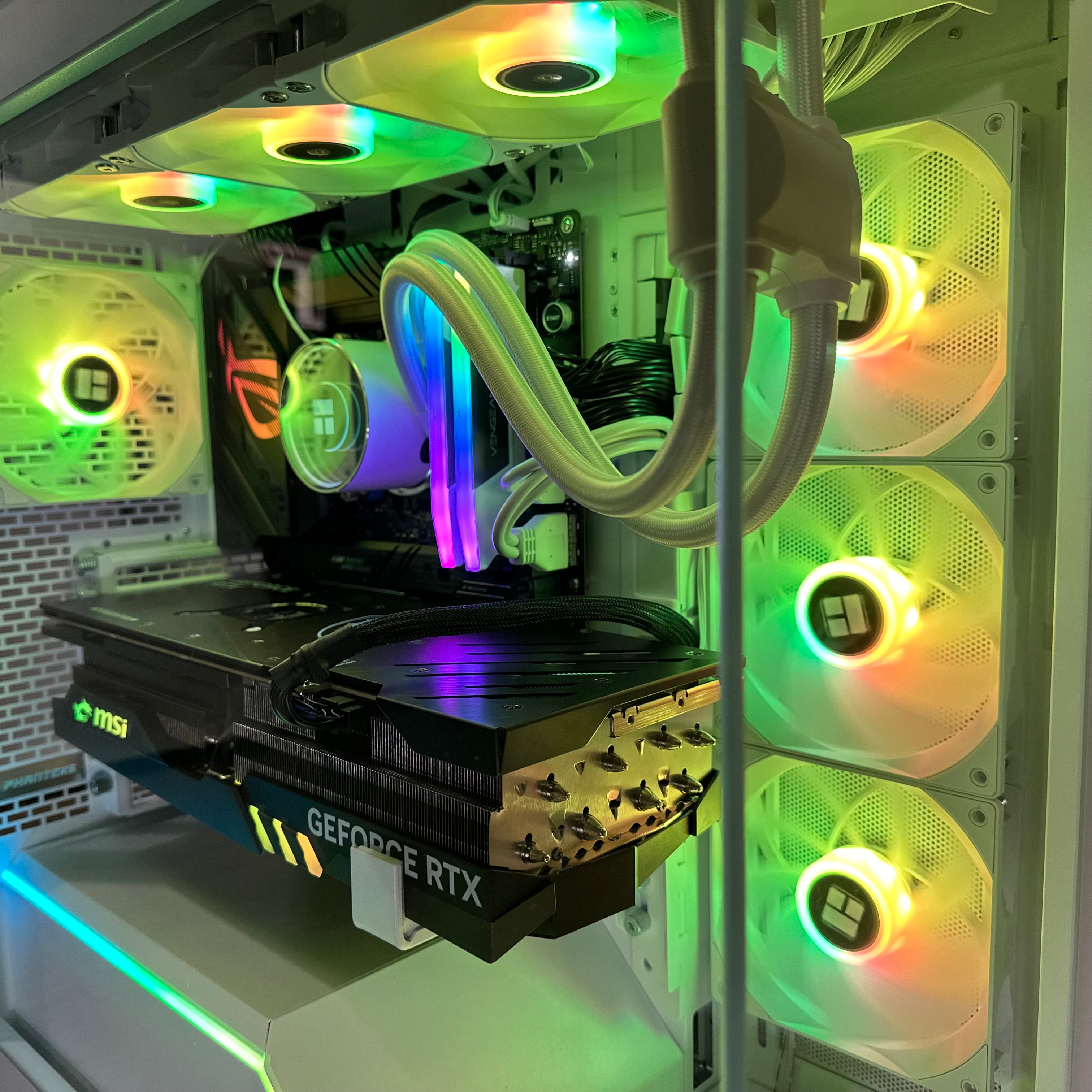
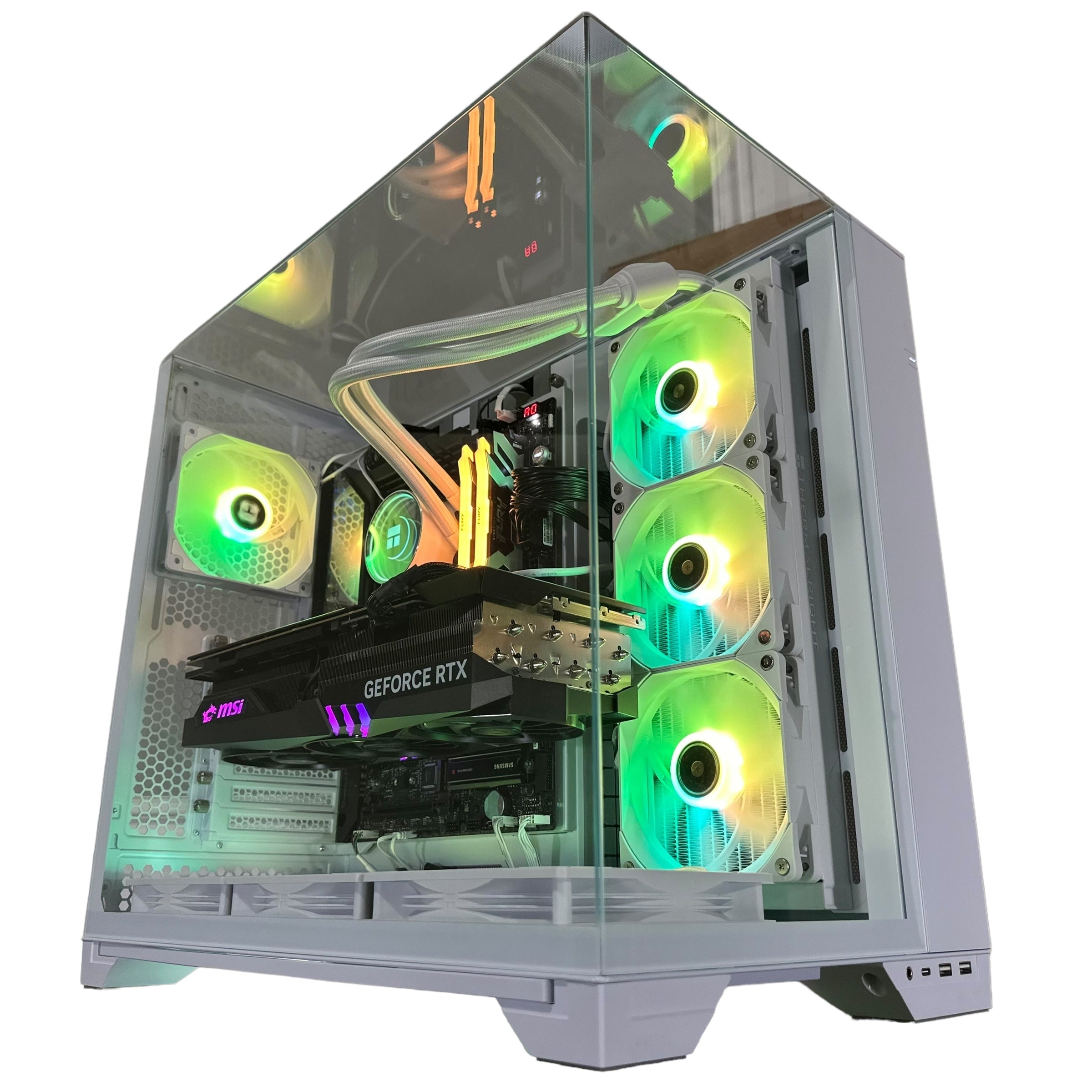
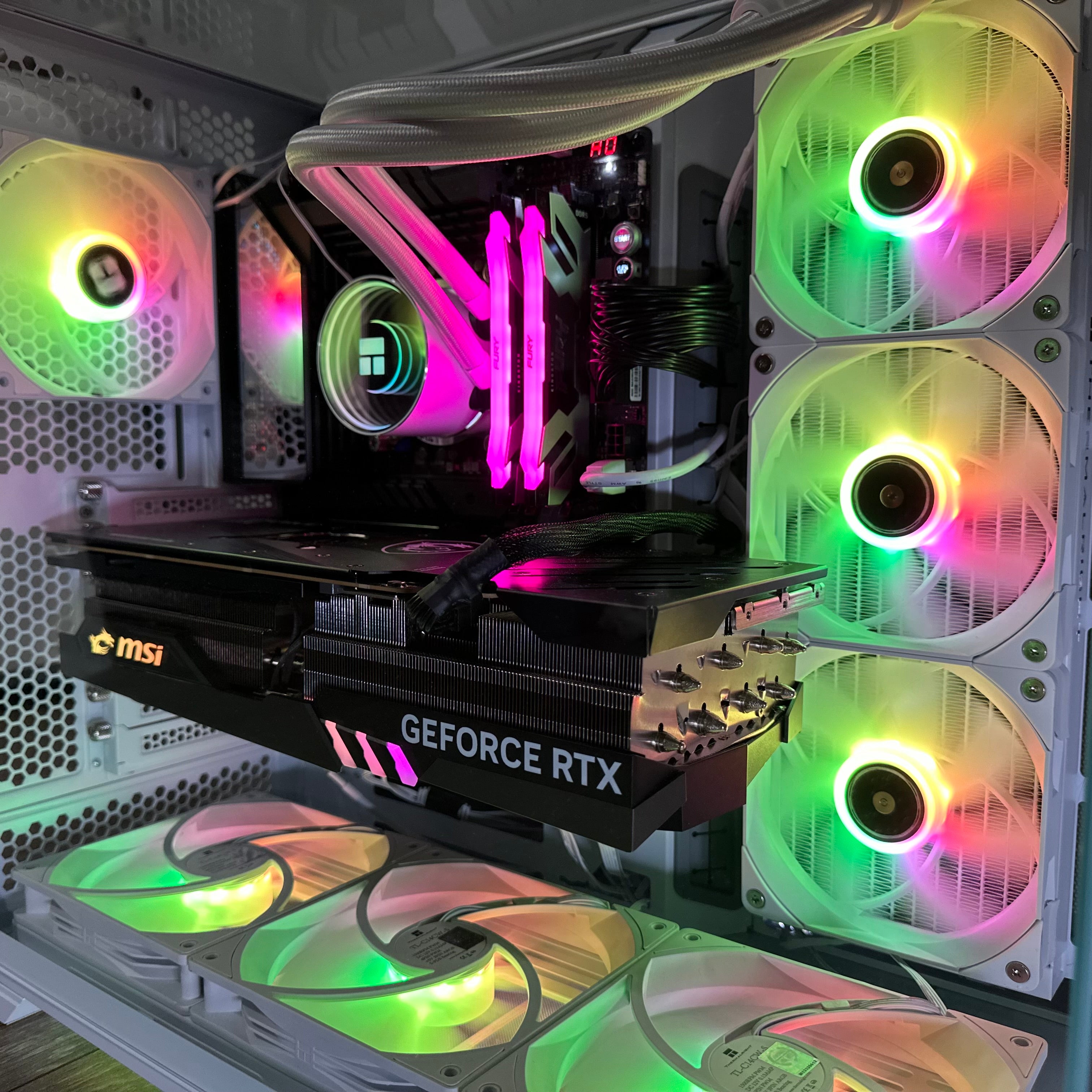
When I first heard about the RTX 4090's 24GB of VRAM, I wondered if it was too much or just right. After testing it at Groovy Computers and talking to our customers, I've got answers.
Key Takeaway
- The RTX 4090 has 24GB of GDDR6X memory running at 21 Gbps across a 384-bit bus, delivering 1,008 GB/s bandwidth
- For 4K gaming in 2025, 24GB handles almost all games with ease. Only a few extreme cases like Cyberpunk 2077 with path tracing come close to 20GB
- Content creators get huge benefits when editing 8K video, rendering complex 3D scenes, or running AI models
- The 24GB should work well for high-end gaming for about 3-5 years. AI workloads may push the limits sooner
- System RAM of 32GB DDR5 pairs best with the RTX 4090 for balanced performance in gaming and work tasks
What Makes the RTX 4090's Memory Special
The RTX 4090 doesn't just have lots of VRAM – it has the right kind of memory set up the right way.
NVIDIA put GDDR6X technology on this card, developed with Micron. This isn't your standard GDDR6. The X version uses PAM4 signaling that sends two bits per signal cycle instead of one, which doubles data rates at similar speeds.
The memory runs at 1,313 MHz actual speed, translating to 21 Gbps effective speed. Across the 384-bit memory setup with twelve 32-bit controllers, this delivers 1,008 GB/s bandwidth.
But here's what really matters: the Ada Lovelace design includes 72MB of L2 cache. That's twelve times more than the RTX 3090's 6MB. This cache acts like a smart buffer, keeping data you need often close to the GPU cores.
In real use, this means the actual bandwidth often beats the raw specs. Testing shows the memory system can keep up at around 90% of the maximum, compared to 70-80% on older cards.
The physical setup matters too. All 24 memory chips sit on one side of the board in two layers, with each chip giving you 2GB of space. This setup balances cooling with how signals move through the card.
And cooling is real. GDDR6X runs hotter than older memory types. Under heavy gaming, temperatures typically hit 90-95°C, sometimes going over 100°C in cases without good airflow.
Gaming Performance Across Resolutions
Let me break down how that 24GB actually works when you're gaming.
1080p Gaming
At 1080p, the RTX 4090 is way more powerful than needed. Most games use only 4-8GB of VRAM even at max settings.
We've tested dozens of games at Groovy Computers. Even memory-hungry games like Cyberpunk 2077 with path tracing use only 10-12GB at this resolution. Games like Counter-Strike 2 and Valorant? They use just 3-5GB.
The card delivers crazy frame rates here. We're talking 450+ fps in Counter-Strike 2 and over 600 fps in Valorant at native 4K with max settings, according to Varidata testing.
At 1080p, you're not buying this card for the VRAM – you're buying it for raw power.
1440p Sweet Spot
This is where things get more interesting. At 1440p with ultra settings, modern games often use 10-14GB of VRAM.
Testing across 25 games by Tom's Hardware showed Avatar: Frontiers of Pandora hitting 12.6GB on Ultra preset. The Last of Us Part I needs more than 8GB even at 1080p, going up to 12-13GB at 1440p.
Horizon Forbidden West shows why space matters. The 16GB RTX 4060 Ti delivers 35-40% higher frame rates than the 8GB model at 1440p Very High settings, with much smoother performance.
The 24GB here isn't just extra room – it's preventing the performance drops that happen when GPUs without enough VRAM have to swap files around.
4K Gaming Where VRAM Really Matters
This is where the RTX 4090's memory truly shows its value. At 4K, VRAM use often goes over 16GB in demanding scenarios.
Cyberpunk 2077 with path tracing and Psycho preset at native 4K peaks at 21.3GB according to Varidata testing. That's cutting it close even with 24GB.
Microsoft Flight Simulator 2024 stays around 19GB during map loads with Ultra terrain detail at 4K. Hogwarts Legacy with Ultra ray tracing sits at 18.7GB.
These aren't rare edge cases anymore – these are popular games that people actually play.
The combination of 4K resolution, high-res textures, and ray tracing creates memory demands that really benefit from the 24GB. Cards with 16GB or less would struggle or fail completely in these setups.
Ray Tracing and AI Features Impact
Modern graphics tech changes the VRAM game completely.
Ray tracing needs special data structures stored in memory that hold scene geometry. These help the GPU quickly test where rays intersect without checking every shape individually.
The memory needed grows with scene complexity. Game studio engineers say ray tracing adds 10-30% VRAM use compared to traditional rasterization, depending on implementation.
Path tracing is even tougher. Cyberpunk 2077's Overdrive mode uses over 20GB at 4K even with DLSS upscaling enabled.
DLSS 3 frame generation adds its own requirements. The tech needs the current frame, previous frame, and motion vector data in memory to guide AI interpolation.
Testing shows DLSS 3 typically adds 300-500MB to VRAM use. That's not much on its own, but it stacks on top of everything else.
The performance gains are worth it though. DLSS 3 can multiply frame rates by 2-4x in well-optimized titles. In Cyberpunk 2077 at 4K with path tracing, enabling DLSS 3 Quality with frame generation boosts performance from around 65 fps to over 120 fps.
High-res texture packs and mods can push limits further. Heavily modded Skyrim or Fallout 4 setups can use 18-20GB with extensive texture upgrades.
Even 24GB has its ceiling when enthusiasts chase maximum visual quality through modding.
Content Creation Powerhouse
For professional work, the RTX 4090's VRAM becomes essential rather than nice-to-have.
Video Editing
DaVinci Resolve Studio loves this card. Testing by Puget Systems shows about 40% faster performance than the RTX 3090 in GPU-heavy tasks like noise reduction and effects.
The combination of power and memory lets you play back 8K footage in real-time with multiple color correction layers and effects – a workflow that's challenging or impossible on weaker hardware.
Scrubbing the timeline and previewing effects can push memory use over 20GB when working with 8K RAW footage and multiple color nodes. The RTX 4090 completes 10-minute 4K timeline exports about 25% faster than the RTX 3090 Ti.
For those working with multiple 4K timelines or single 8K timelines simultaneously, the 24GB buffer proves essential for maintaining real-time preview smoothness. If you're building a system for video editing, the RTX 4090 is a significant upgrade.
3D Rendering
Applications like Blender with Cycles, OctaneRender, and Redshift show even bigger benefits.
Puget Systems testing with OctaneBench found the RTX 4090 delivering about 92% faster rendering than the RTX 3090. Single RTX 4090 performance nearly matches dual RTX 3090 setups while using less power and taking less physical space.
The 24GB lets artists work with highly detailed scenes containing millions of polygons and high-res texture maps without hitting memory limits. Complex architectural visualization scenes that took three minutes now finish in 90 seconds.
Professional 3D artists often cite VRAM as a critical factor in GPU selection. Many say 24GB is a practical minimum for serious work, though additional headroom would benefit extremely complex scenes.
AI and Machine Learning
The RTX 4090 delivers about 661 teraflops of FP16 compute and 1,321 teraflops of FP8 with sparsity enabled. That's 2-4x faster training than the RTX 3090 in typical configurations, according to Vast.ai assessments.
The 24GB enables training models with up to approximately 100 million parameters at reasonable batch sizes without memory optimization tricks that slow training.
For inference, you can handle models up to about 70 billion parameters with quantization. Testing with Ollama running DeepSeek-R1 70B in 4-bit mode showed generation speeds around 18 tokens per second.
Larger models with 671 billion parameters require multi-GPU setups or data center hardware with substantially more memory.
Stable Diffusion and similar generative models typically use 6-12GB, but can reach 18GB or more when generating high-resolution images or processing large batches. The RTX 4090 can run multiple instances simultaneously where other cards struggle with one.
Building a System Around the RTX 4090
You can't just drop an RTX 4090 into any system and expect optimal performance.
Power Requirements
The 450W power draw is serious business. NVIDIA recommends an 850W power supply, but that assumes relatively modest components elsewhere.
With high-end processors like the i9-13900K or Ryzen 9 7950X3D, we recommend 1000W or larger at Groovy Computers. We've seen cases where 850W supplies struggled when running CPU and GPU intensive workloads simultaneously.
The 12VHPWR connector generated some concern with reports of melted connectors. NVIDIA reported about 50 cases globally, representing roughly 0.04-0.05% failure rate based on early sales figures.
Investigation revealed most failures stemmed from improper insertion – not fully seating the connector. The design requires more insertion force than older connectors. Improved adapters and clearer instructions have largely resolved issues, though some consumer confidence was damaged.
System RAM Recommendations
We recommend 32GB DDR5 as the practical minimum for systems built around an RTX 4090. This isn't just about matching capacity – it's about preventing memory bottlenecks.
Testing shows that 16GB DDR4 systems paired with an RTX 4090 exhibit stuttering and extended loading times in memory-intensive games. The OS resorts to disk paging when physical RAM depletes.
Upgrading to 32GB DDR5 eliminates these issues. Going further to 64GB shows marginal benefit for pure gaming, but content creators working with video editing or 3D rendering definitely benefit from the additional headroom.
For gaming at 4K where GPU becomes the primary bottleneck, the difference between DDR4-3600 and DDR5-6000 typically measures within single-digit percentages. However, DDR5 demonstrates gains in CPU-limited scenarios like high-refresh 1080p gaming.
Processor Pairing
At 4K resolution, even fairly modest modern processors like the Ryzen 5 7600X or i5-13600K can allow the RTX 4090 to reach full potential in most gaming scenarios.
At lower resolutions or in CPU-intensive games, high-end processors like the Ryzen 9 7950X3D or i9-14900K show clear advantages.
AMD's X3D processors with massive L3 cache increases have produced interesting results. The Ryzen 7 7800X3D often matches or exceeds Intel's flagship processors in gaming frame rates despite lower clock speeds, thanks to cache efficiency.
For RTX 4090 systems focused on maximum gaming performance, the 7800X3D has become a popular choice – offering competitive performance with much pricier processors while consuming less power and generating less heat.
Physical Considerations
Most RTX 4090 cards exceed 304mm in length and occupy three full expansion slots. Partner cards like the ASUS ROG Strix measure 357.6mm long and 70.1mm thick, making them 3.5-slot cards.
This creates clearance challenges in many cases. Small form factor builders report significant difficulties, often resorting to vertical GPU mounting or selecting specific cases designed for three-slot cards.
The substantial heat output can raise case temperatures by several degrees, potentially affecting cooling of other components. Strong airflow cases with adequate fan support are essential.
Cards can weigh close to 2kg for some models. Proper support prevents PCIe slot damage over time. Many manufacturers include support brackets or mounting hardware.
Modified VRAM Variants and What They Mean
Here's where things get interesting. Chinese engineering firms have developed methods to modify RTX 4090 cards to 48GB of VRAM.
They disassemble retail cards, remove factory memory chips, and replace them with double-sided configurations. This uses custom PCBs borrowed from RTX 3090 designs combined with AD102 GPU chips and modified VBIOS firmware.
The process involves soldering twelve additional 2GB GDDR6X chips to the board's back side, creating 48GB total while maintaining the 384-bit bus width.
These modified cards reportedly sell for approximately $2,500 in Chinese markets, about $700 over standard RTX 4090 pricing.
Performance testing shows minimal gaming benefit from doubled capacity – almost no consumer games approach 24GB usage currently.
However, for AI workloads, especially running large language models, the expanded capacity enables significantly larger model sizes. Testing with Ollama running DeepSeek-R1 70B in 4-bit mode showed generation speeds around 18 tokens per second on 48GB modified cards, a workload impossible on standard 24GB configurations.
Reliability concerns center on thermal solutions designed for single-sided memory now cooling twice as many chips. Quality of additional memory chips remains uncertain. Modified VBIOS exists outside official support and could become incompatible with future driver updates.
Rumors of 96GB modifications circulate, though concrete evidence remains limited. The technical challenges prove substantially more complex, requiring 4GB memory chips that don't exist in current GDDR6X lineups.
This scene raises questions about NVIDIA's product segmentation strategy. The 24GB configuration exceeds almost all consumer gaming requirements while staying below capacity that would make the card competitive with professional options in AI development.
This positioning appears deliberate to maintain product separation between consumer GeForce cards and professional offerings like the RTX 6000 Ada Generation with 48GB at over $6,000.
How Long Will 24GB Remain Enough
Looking at history, flagship graphics cards typically remain viable for high-quality gaming approximately 4-6 years after launch before memory capacity becomes limiting.
The GTX 1080 Ti launched in March 2017 with 11GB. It now struggles with certain modern titles at maximum texture settings, particularly above 1080p resolution.
The RTX 4090's position looks fairly strong. Its 50% capacity advantage over current 16GB mid-range cards matches or exceeds relative advantages previous flagships enjoyed at launch.
Advanced texture compression techniques, machine learning asset streaming, and upsampling technologies like DLSS may reduce raw memory requirements compared to traditional rendering.
However, counteracting factors include growing 8K display adoption, increasing baseline texture quality as storage improves, and ray tracing implementations requiring substantial memory for acceleration structures.
Our assessment? For 4K gaming, the 24GB should remain adequate through approximately 2027-2029, especially when utilizing upscaling and frame generation technologies. Professional users may encounter limitations for cutting-edge AI models or exceptionally complex 3D scenes sooner.
The card represents perhaps the peak of the generation where raw performance increases justify premium pricing regardless of practical necessity. Future generations may need to demonstrate more compelling advantages to justify similar premiums.
RTX 4090 vs RTX 5090 Memory Comparison
The RTX 5090 introduced in January 2025 features 32GB of GDDR7 memory at 28 Gbps across a 512-bit bus, delivering 1,792 GB/s bandwidth.
Benchmark testing shows the RTX 5090 delivers approximately 27% higher average frame rates than the RTX 4090 in gaming, though the gap narrows in CPU-limited scenarios.
DLSS 4 with multi-frame generation enables generating up to three additional frames per rendered frame, potentially quadrupling effective frame rates in supported titles.
The RTX 5090's $1,999 retail price represents a 25% premium over RTX 4090 original MSRP, though current market conditions see RTX 4090 cards selling for $1,800-2,000, narrowing the actual price gap.
The performance advantage proves most pronounced in heavy ray tracing workloads, AI features, or professional applications benefiting from additional capacity and bandwidth.
For pure 4K gaming without heavy reliance on frame generation or ray tracing, the RTX 4090 remains capable of delivering excellent experiences in almost all current titles.
Frequently Asked Questions
How much VRAM does the RTX 4090 have?
The RTX 4090 features 24GB of GDDR6X memory running at 21 Gbps across a 384-bit memory interface, delivering 1,008 GB/s of bandwidth. This represents one of the highest VRAM capacities available on consumer graphics cards, matched only by AMD's RX 7900 XTX which uses standard GDDR6 rather than the faster GDDR6X technology.
Is 24GB VRAM enough for 4K gaming in 2025?
Yes, 24GB is more than adequate for almost all 4K gaming scenarios in 2025. Most demanding titles consume 12-18GB at 4K ultra settings, with only extreme cases like Cyberpunk 2077 with path tracing approaching 20-21GB. The generous capacity provides comfortable headroom for current titles and should remain sufficient for several years of future releases.
What system RAM works best with the RTX 4090?
We recommend 32GB of DDR5 memory as the practical minimum for RTX 4090 systems focused on gaming and general use. Professional users working with video editing, 3D rendering, or machine learning benefit from 64GB or more. While DDR4 functions adequately, DDR5 provides better performance in CPU-limited scenarios and better overall system balance with high-end components.
Does the RTX 4090 need a special power supply?
Yes, the RTX 4090 requires a robust power supply with the new 12VHPWR connector or appropriate adapters. NVIDIA recommends minimum 850W, though we suggest 1000W or larger for systems with high-end processors like the i9-13900K or Ryzen 9 7950X3D. Ensure your PSU can deliver adequate wattage on the 12V rails and has the proper connectors or adapters.
Can the RTX 4090 run AI models and machine learning workloads?
Absolutely. The 24GB capacity enables training models with up to approximately 100 million parameters at reasonable batch sizes and inference for models up to about 70 billion parameters with quantization. For Stable Diffusion and similar generative models, the card can run multiple instances simultaneously or generate ultra-high-resolution images that would be challenging on cards with smaller memory.
How hot does RTX 4090 memory get during gaming?
GDDR6X memory temperatures typically reach 90-95°C during intensive gaming workloads under typical air-cooled configurations, sometimes exceeding 100°C in poorly ventilated cases. While Micron specifies maximum operating temperatures of 95°C, brief excursions above this shouldn't cause immediate damage. Proper case airflow and quality cooling solutions help manage these temperatures effectively.
Will 24GB VRAM be enough in 3-5 years?
Based on historical trends and current trajectory, 24GB should remain adequate for high-end gaming through approximately 2027-2029, particularly when utilizing upscaling technologies like DLSS. The capacity exceeds most current requirements by comfortable margins, though AI workloads and professional applications may encounter limitations sooner than gaming. The combination of efficient cache design and evolving rendering techniques should help extend the card's useful lifespan.
What's the difference between RTX 4090 and modified 48GB versions?
Modified 48GB versions use custom PCBs with memory chips on both sides of the board and modified VBIOS firmware, effectively doubling capacity while maintaining the same memory bus width. These modifications show minimal gaming benefits since no consumer games approach 24GB usage, but enable substantially larger AI model utilization. However, they exist outside official support channels, may have thermal concerns, and warranty implications make them risky investments for most users.

Leave a comment
This site is protected by hCaptcha and the hCaptcha Privacy Policy and Terms of Service apply.