
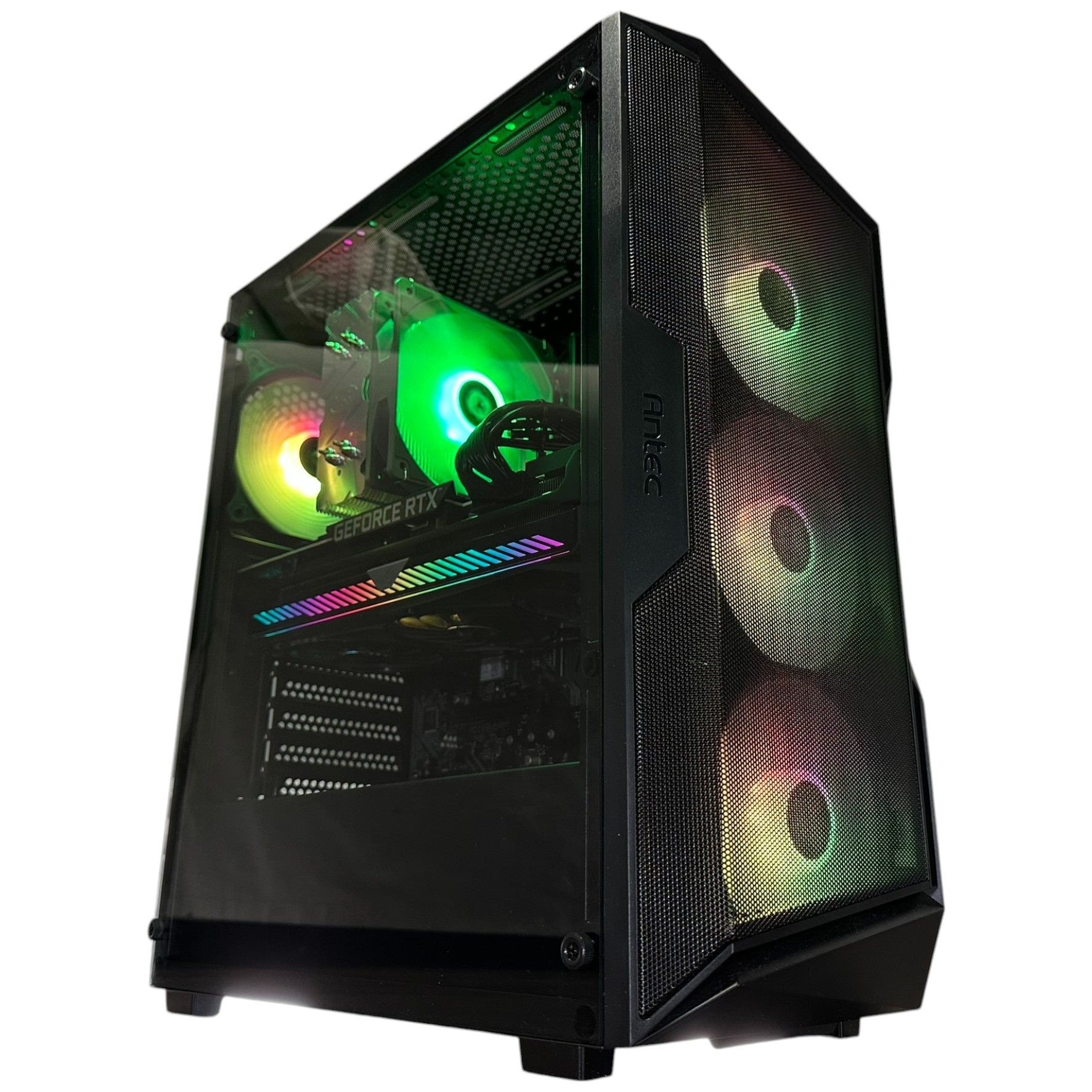
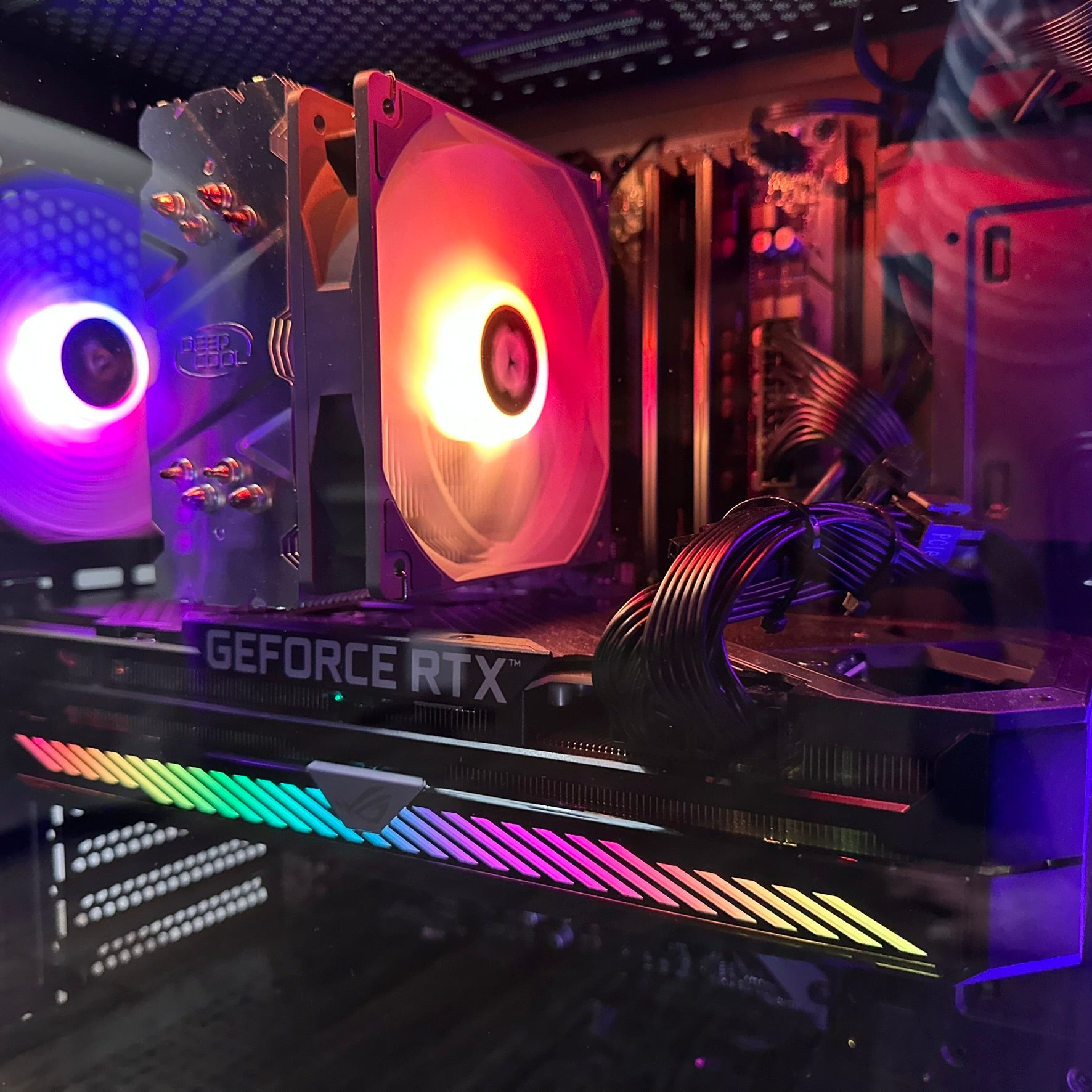

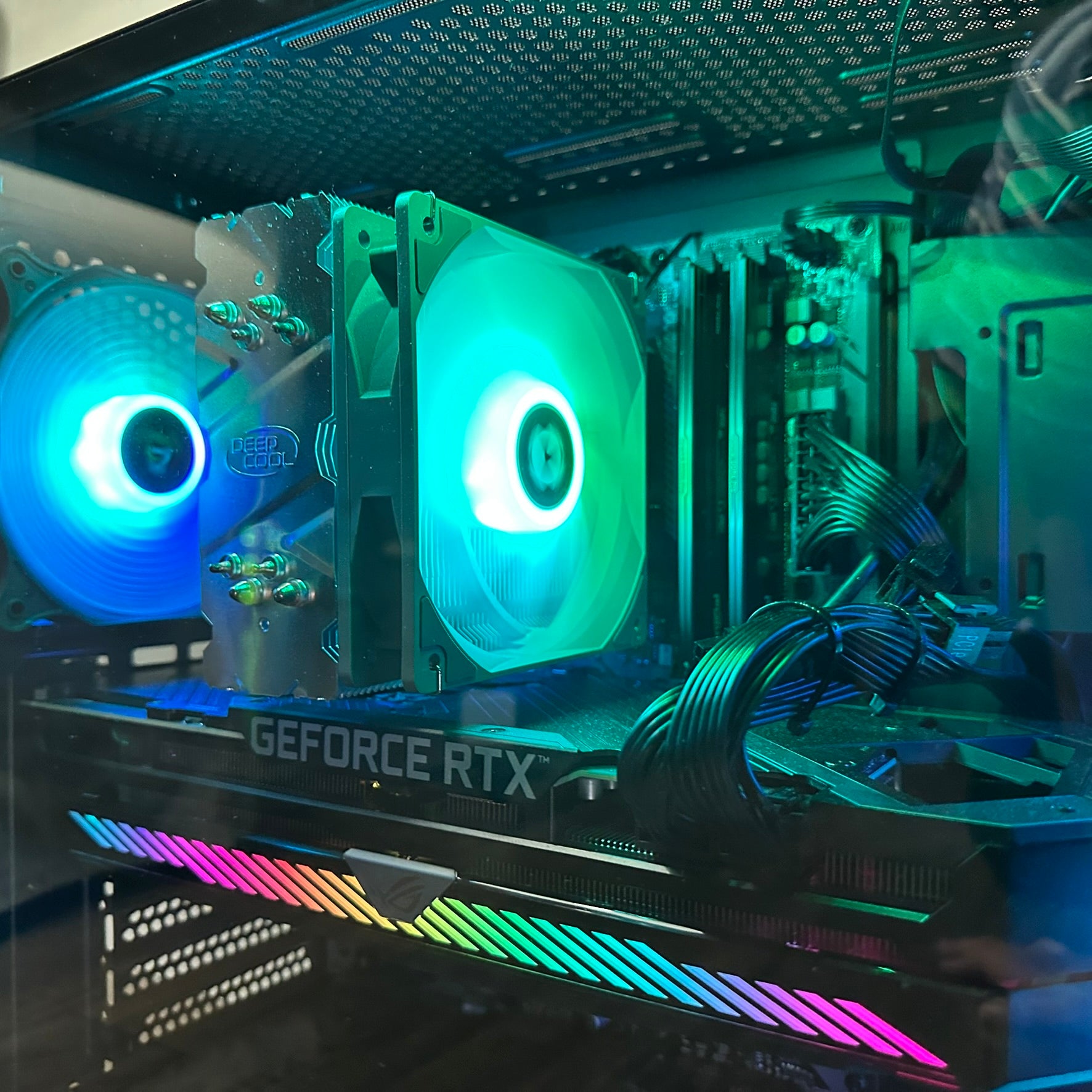
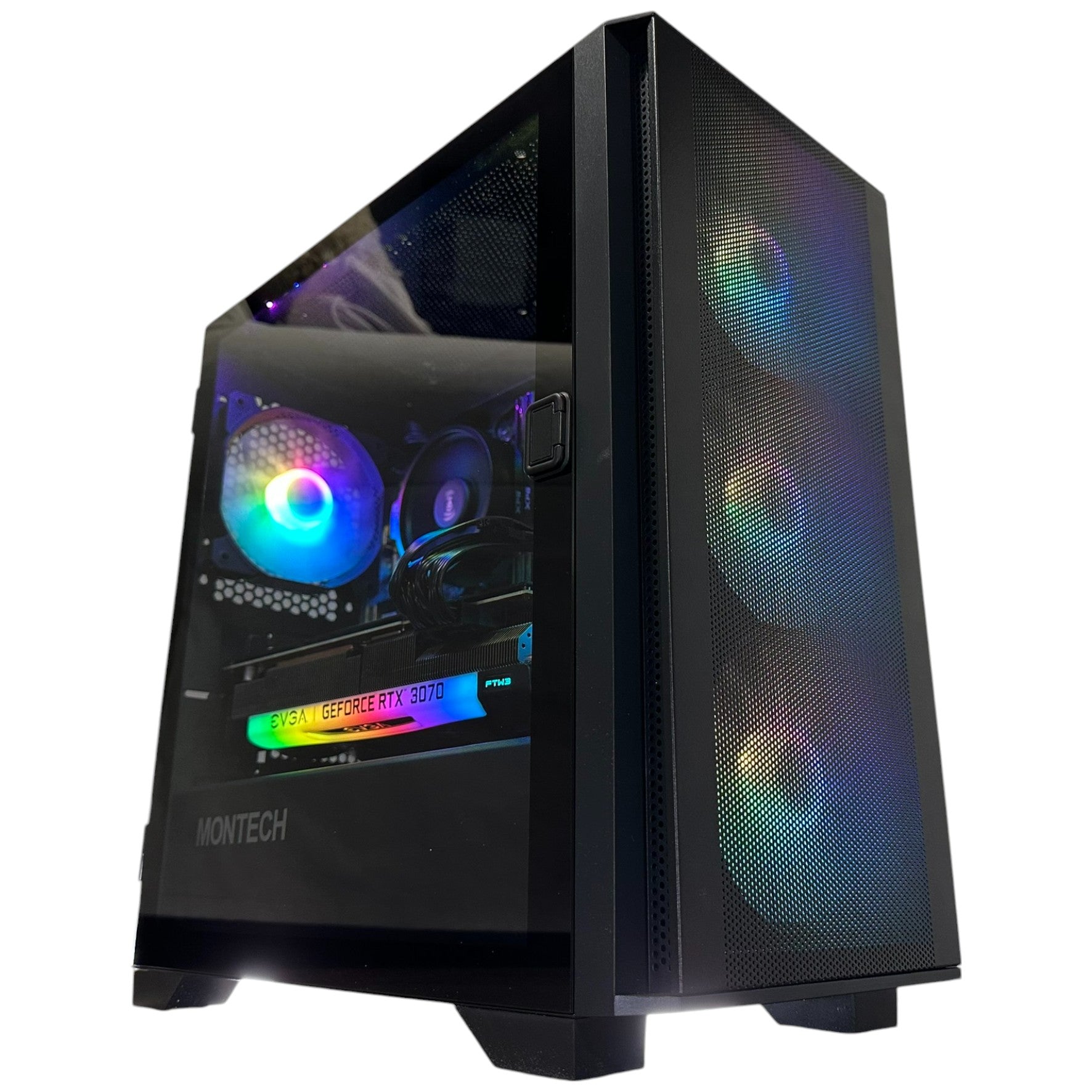
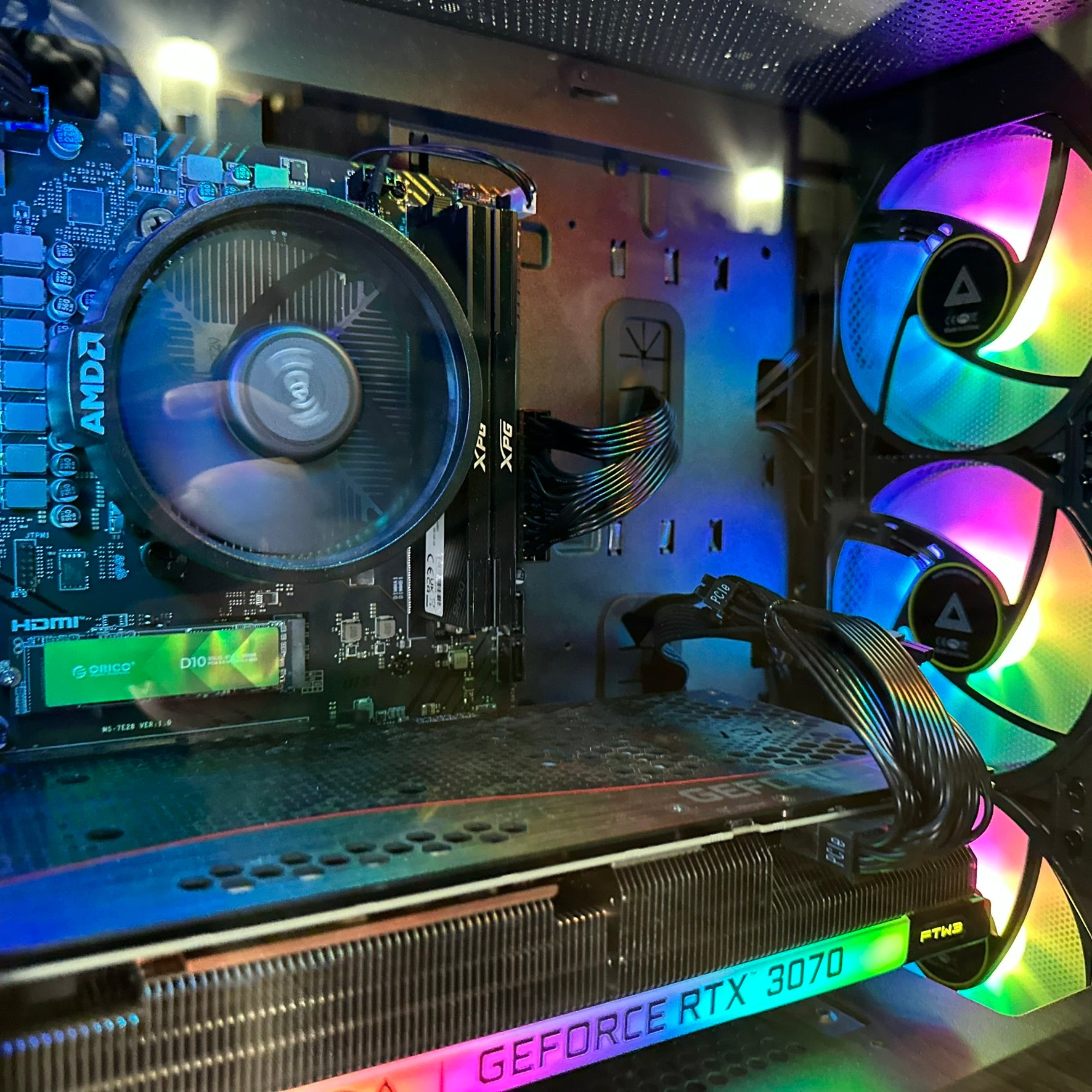
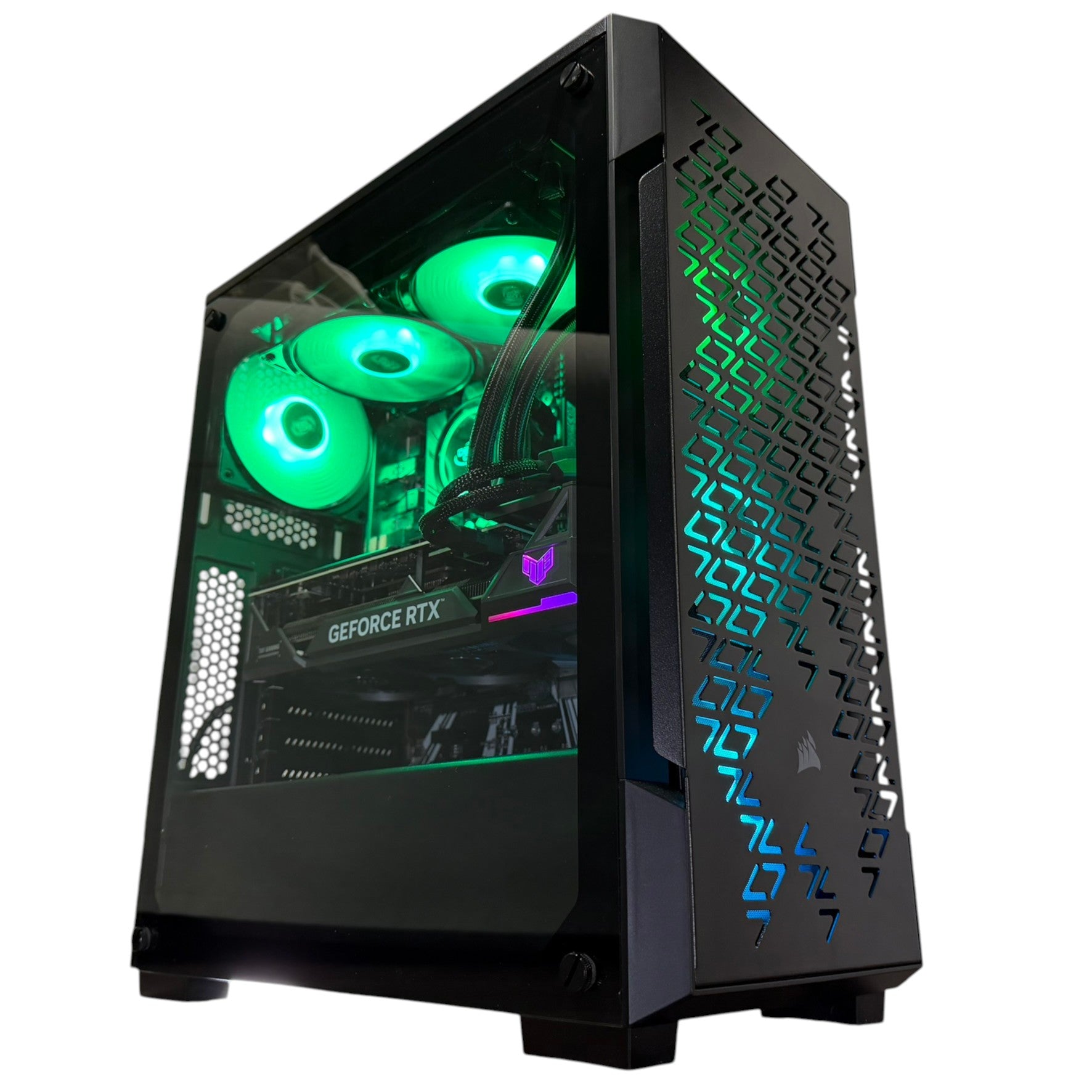

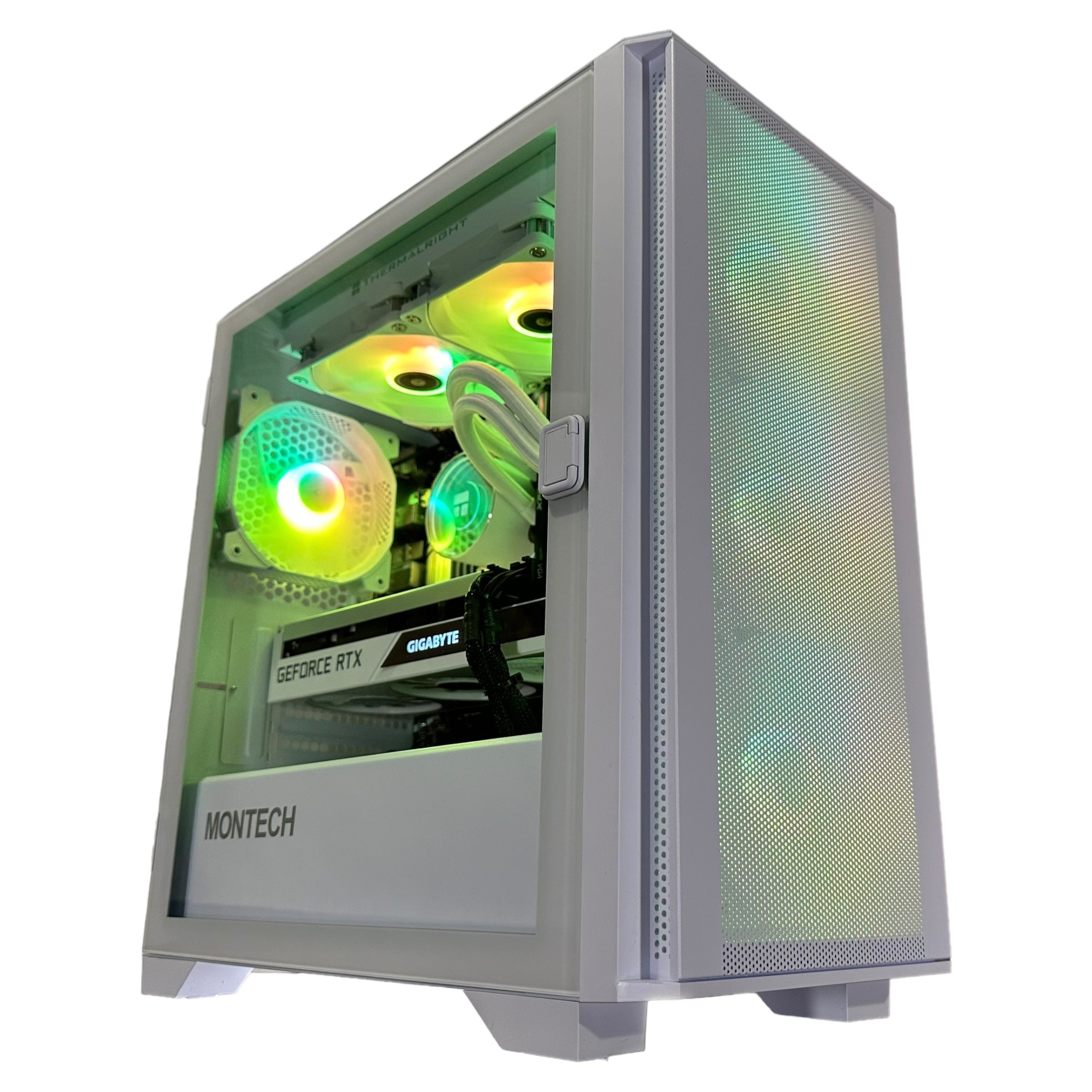
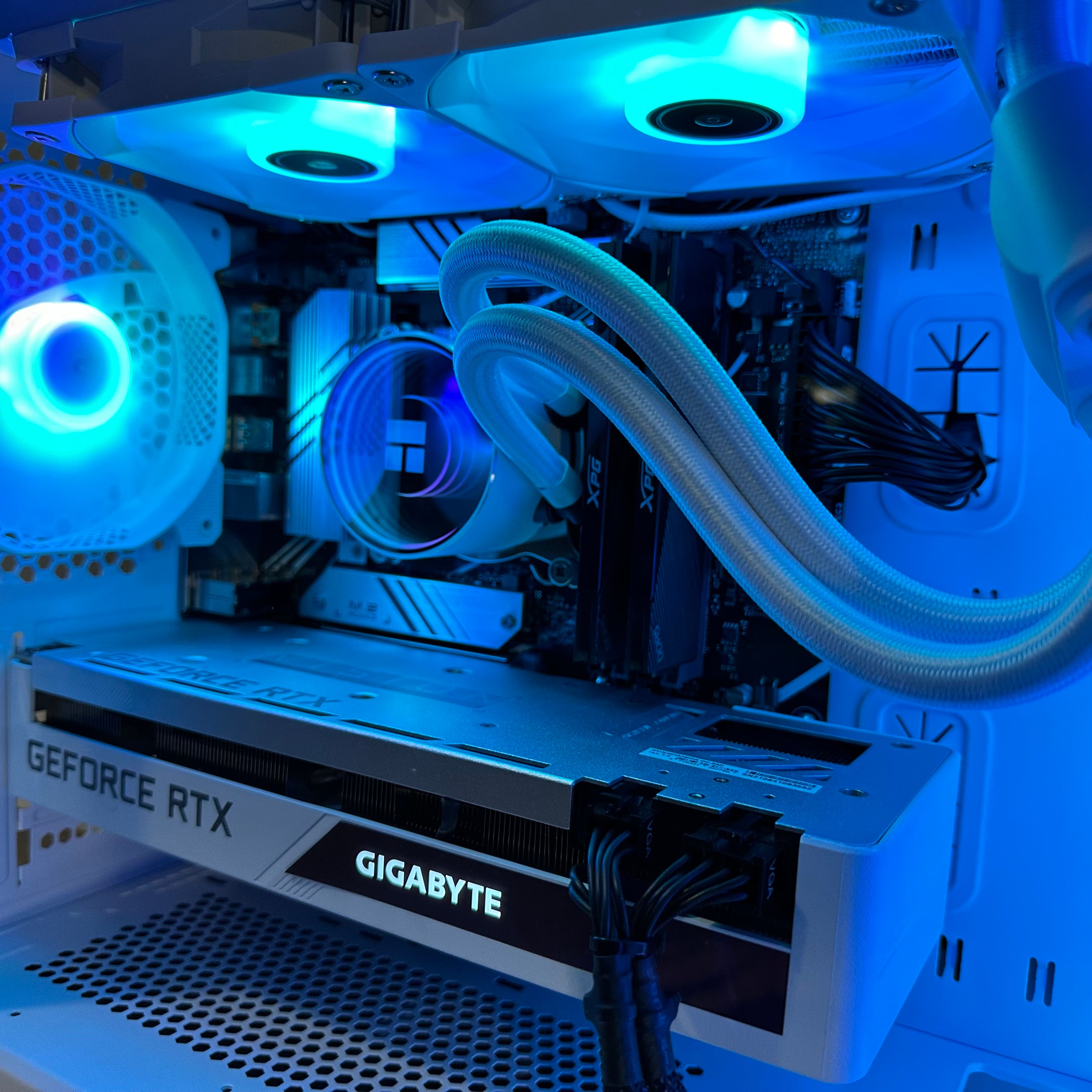
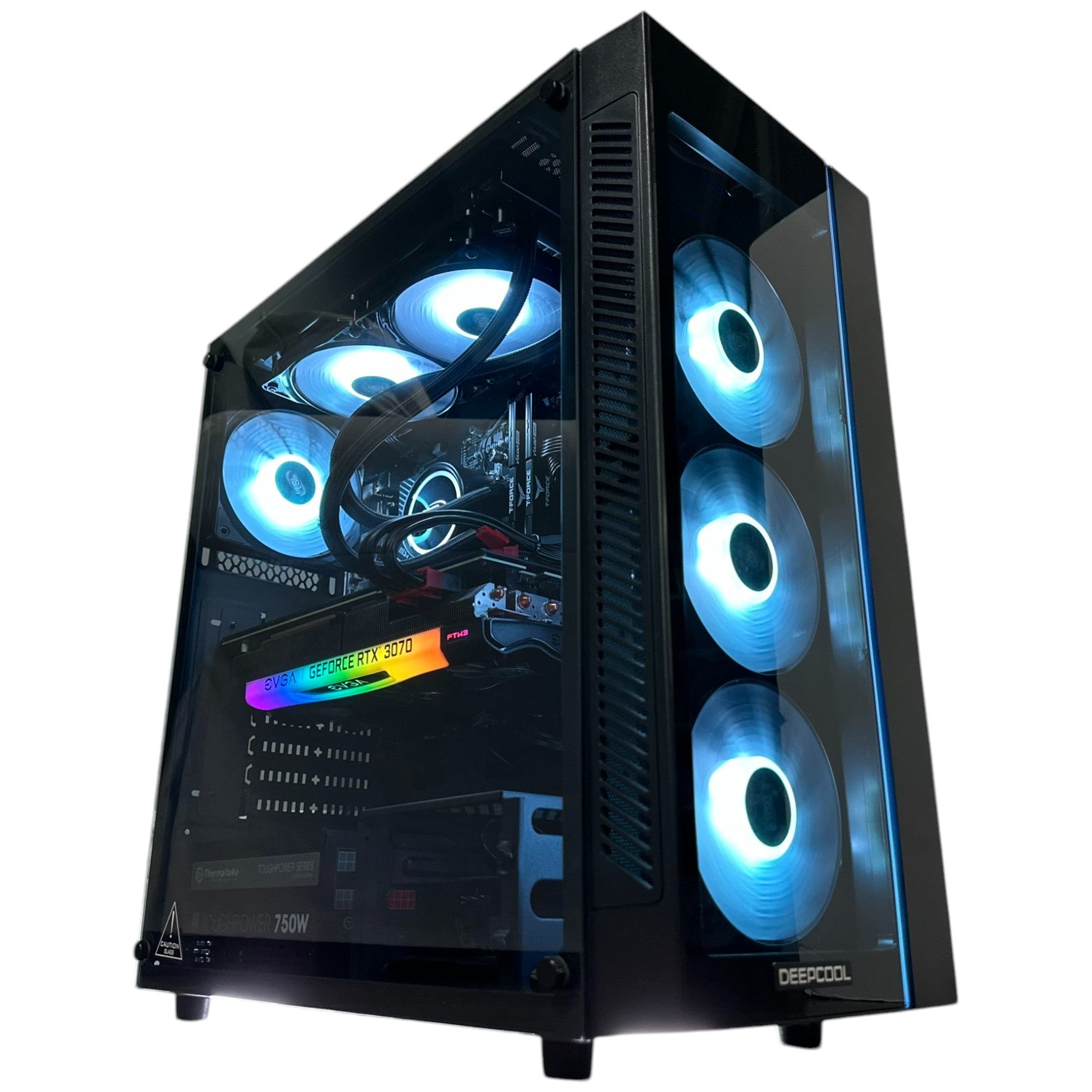
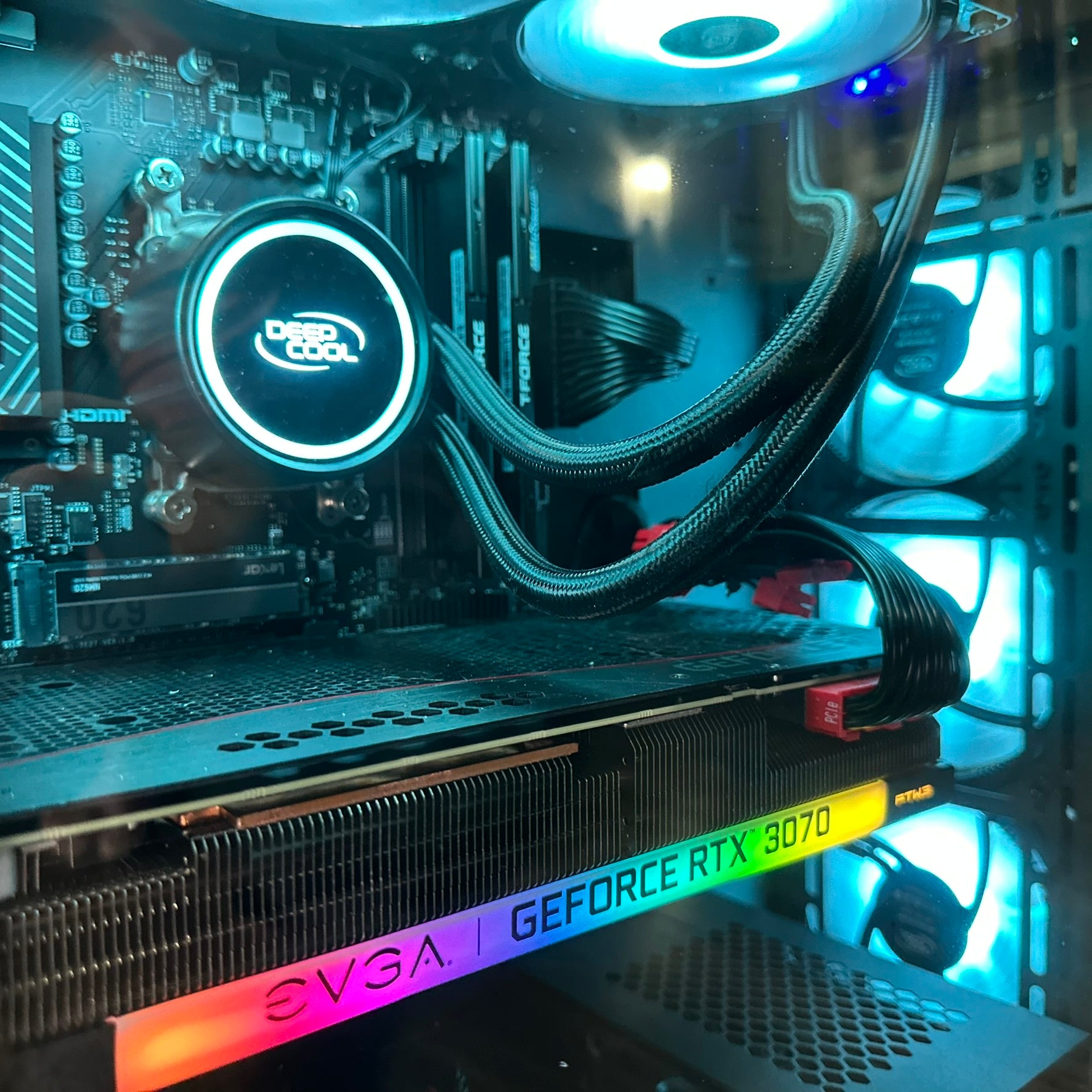
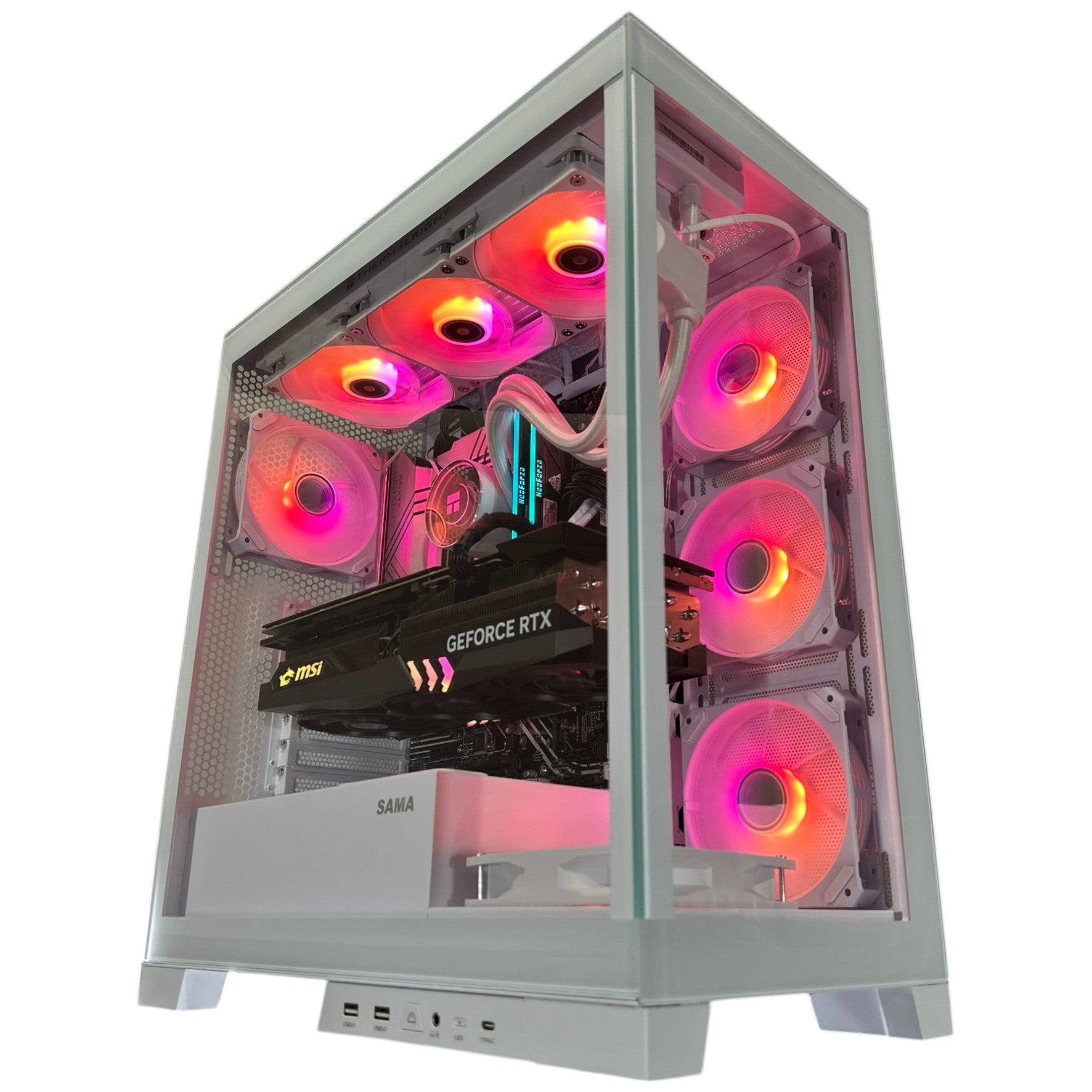
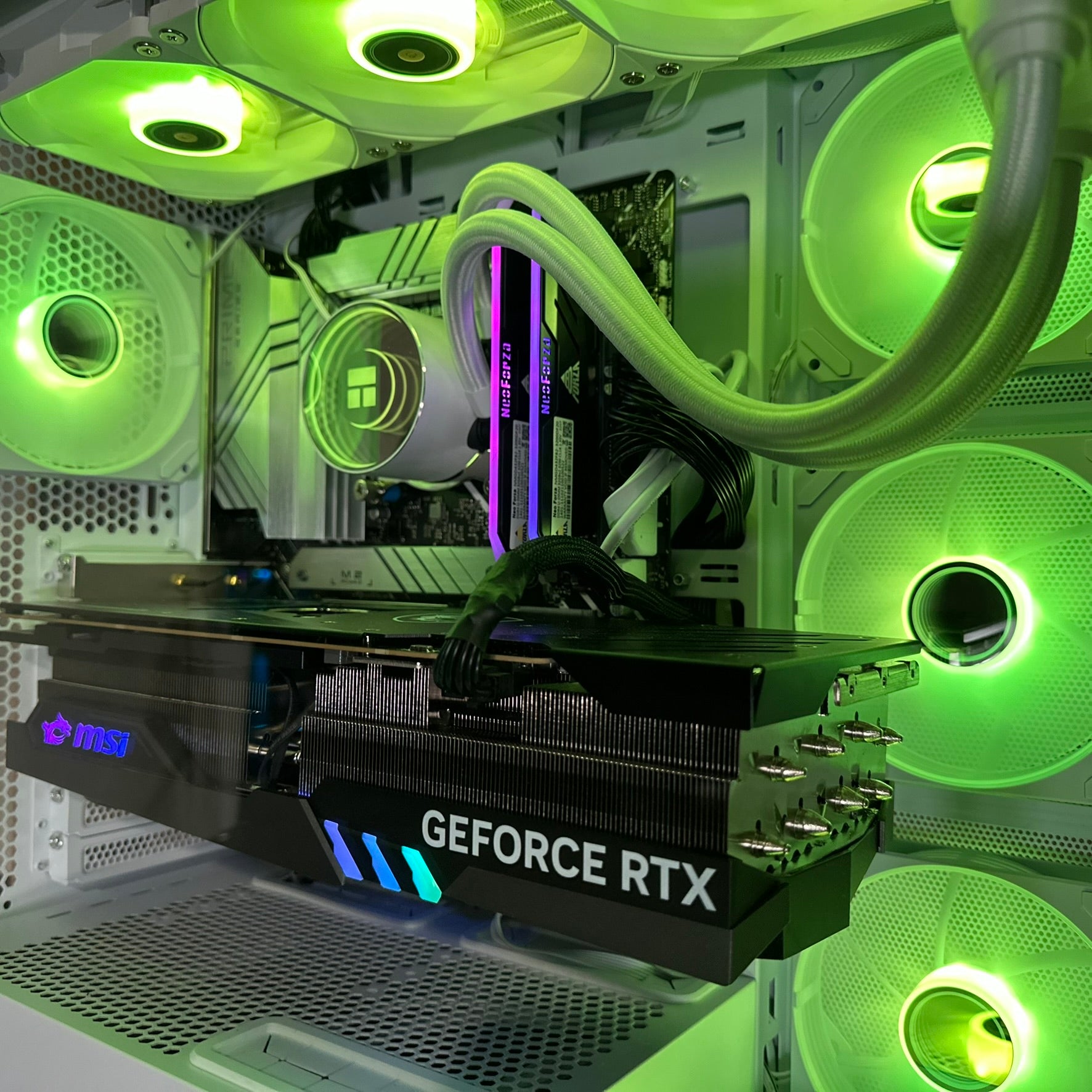
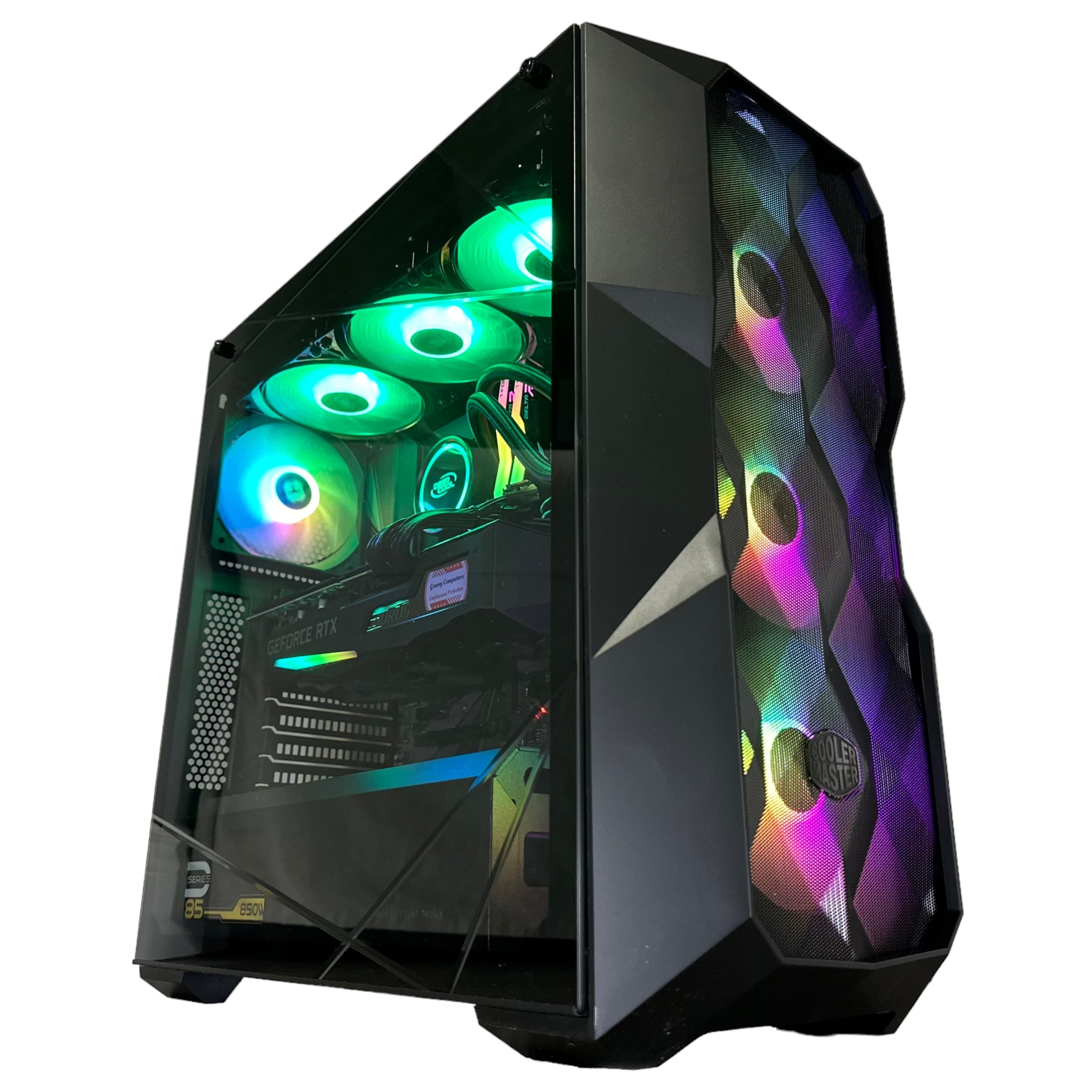
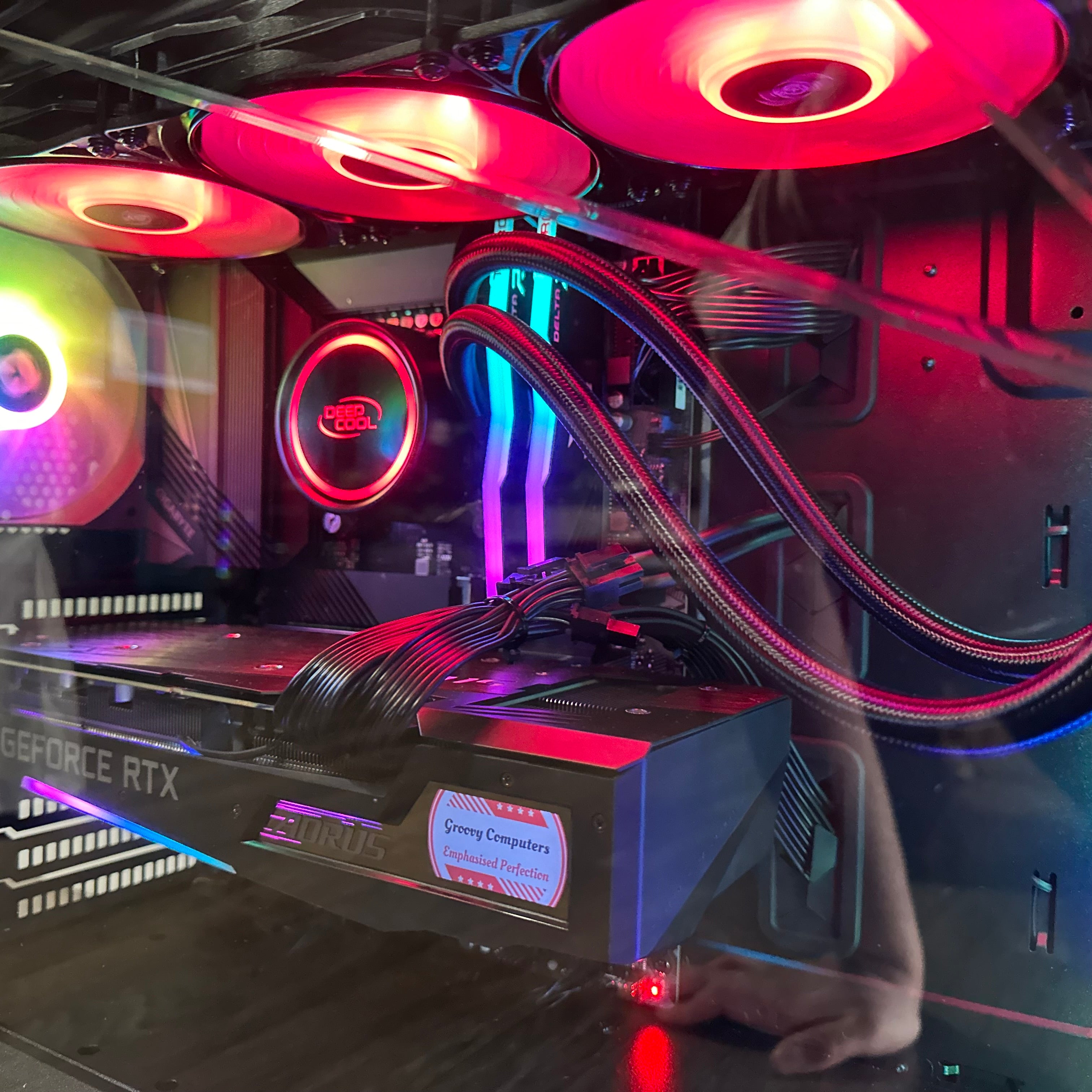
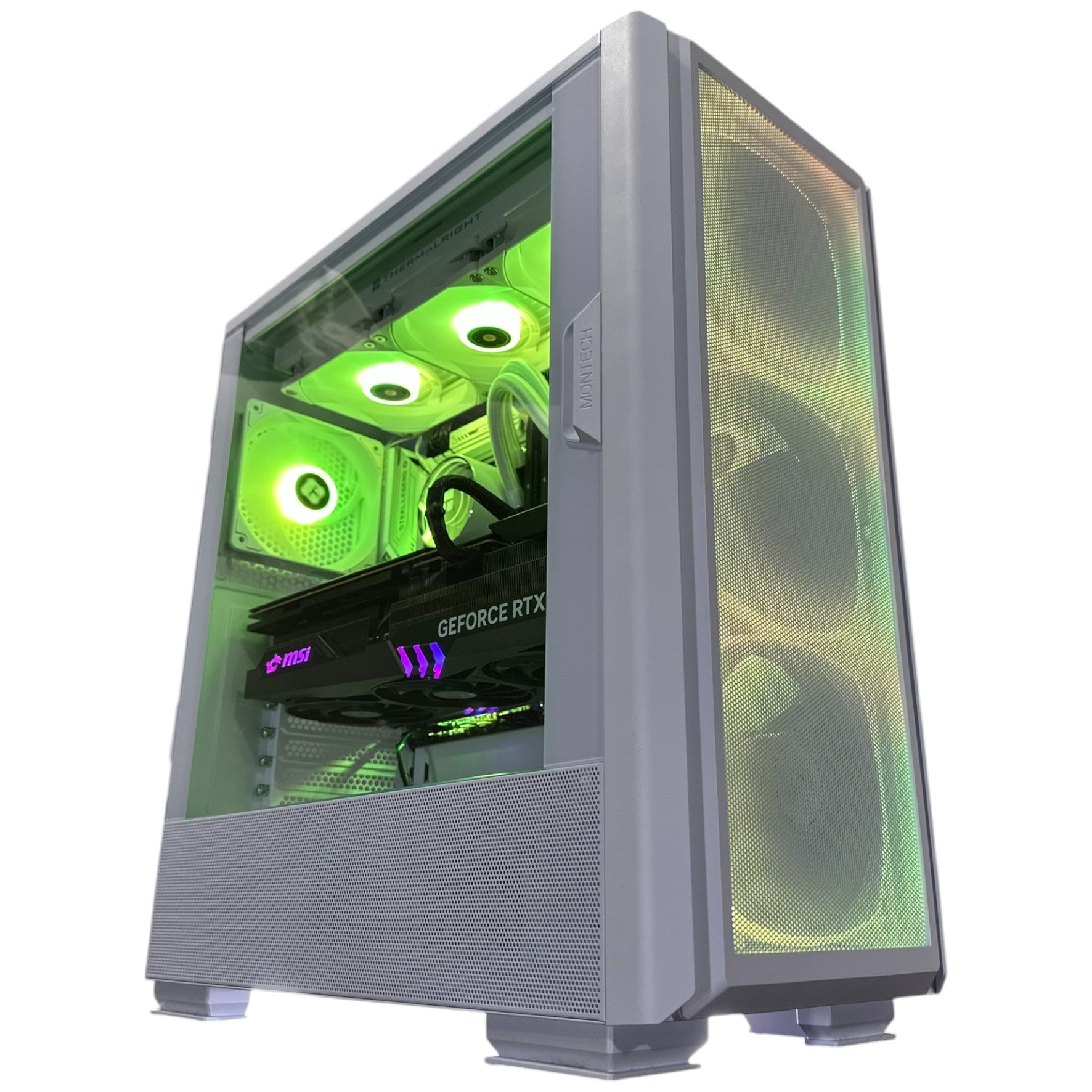
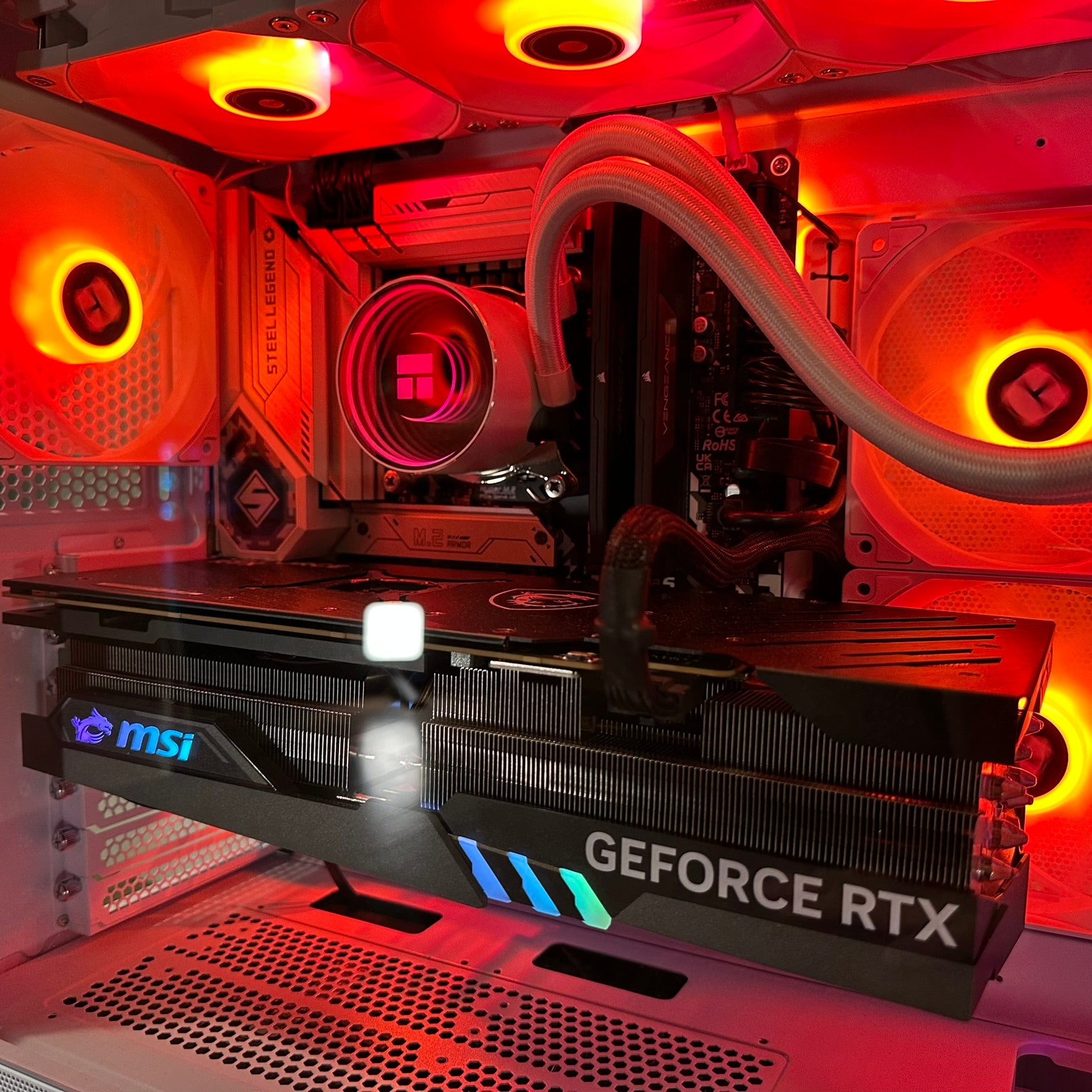
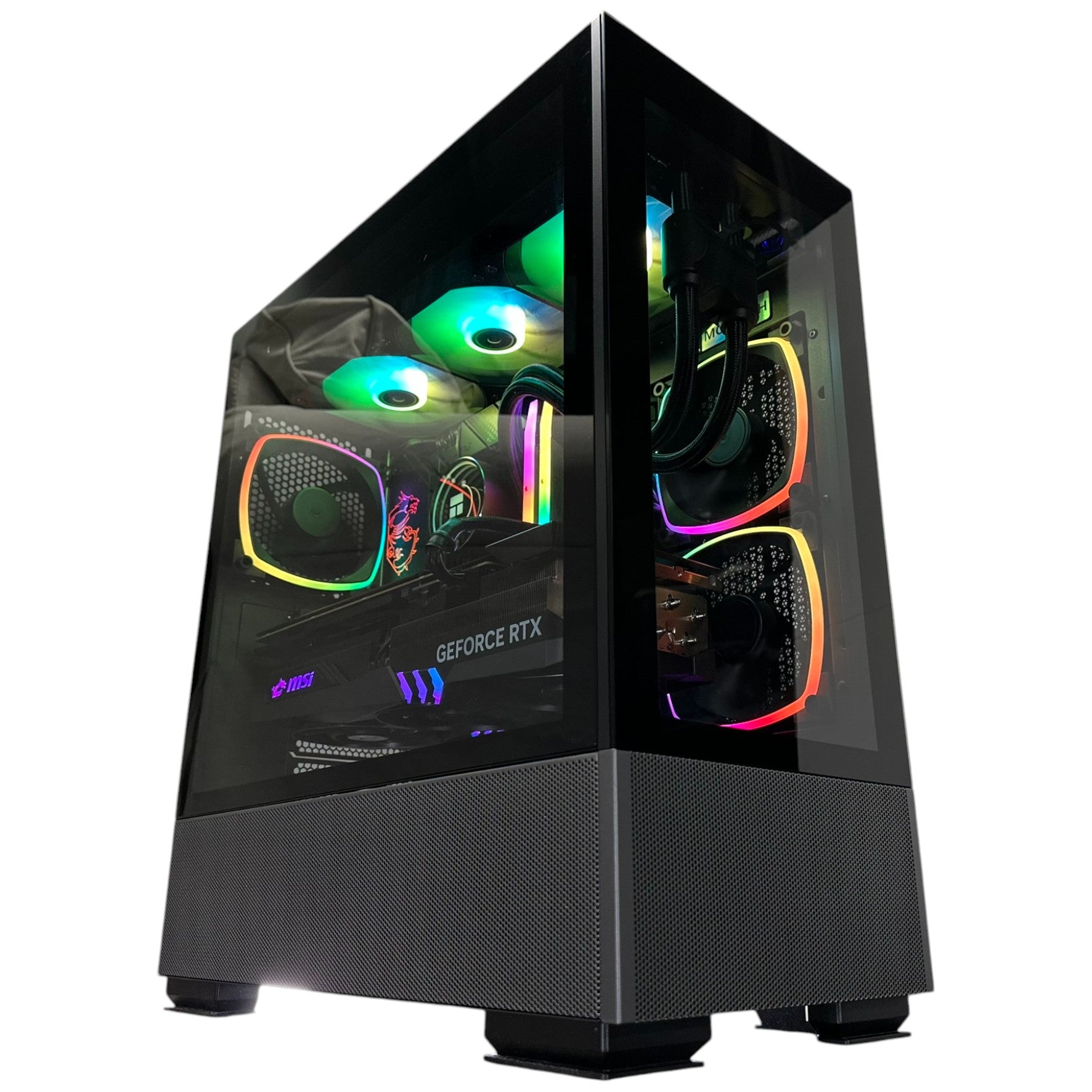
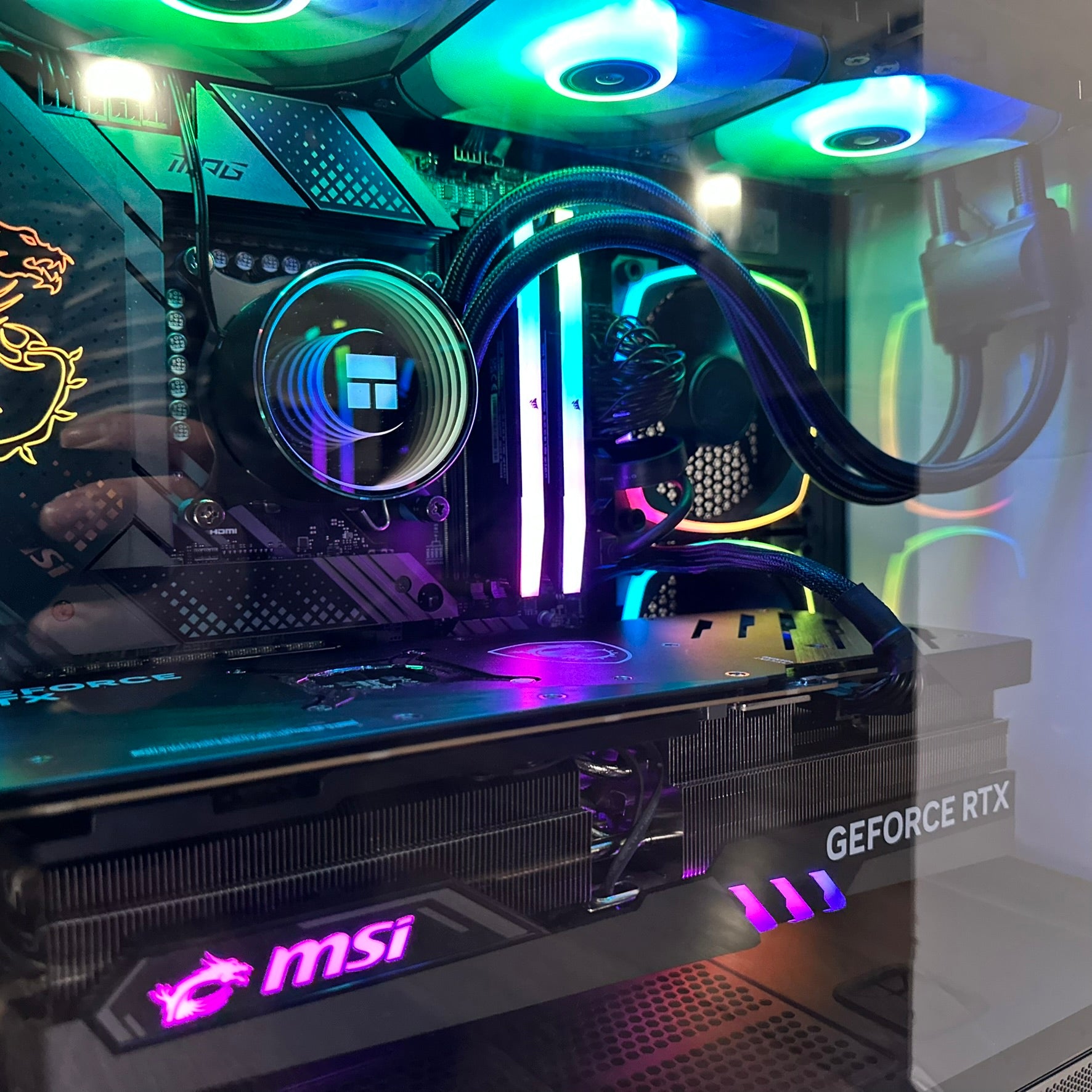
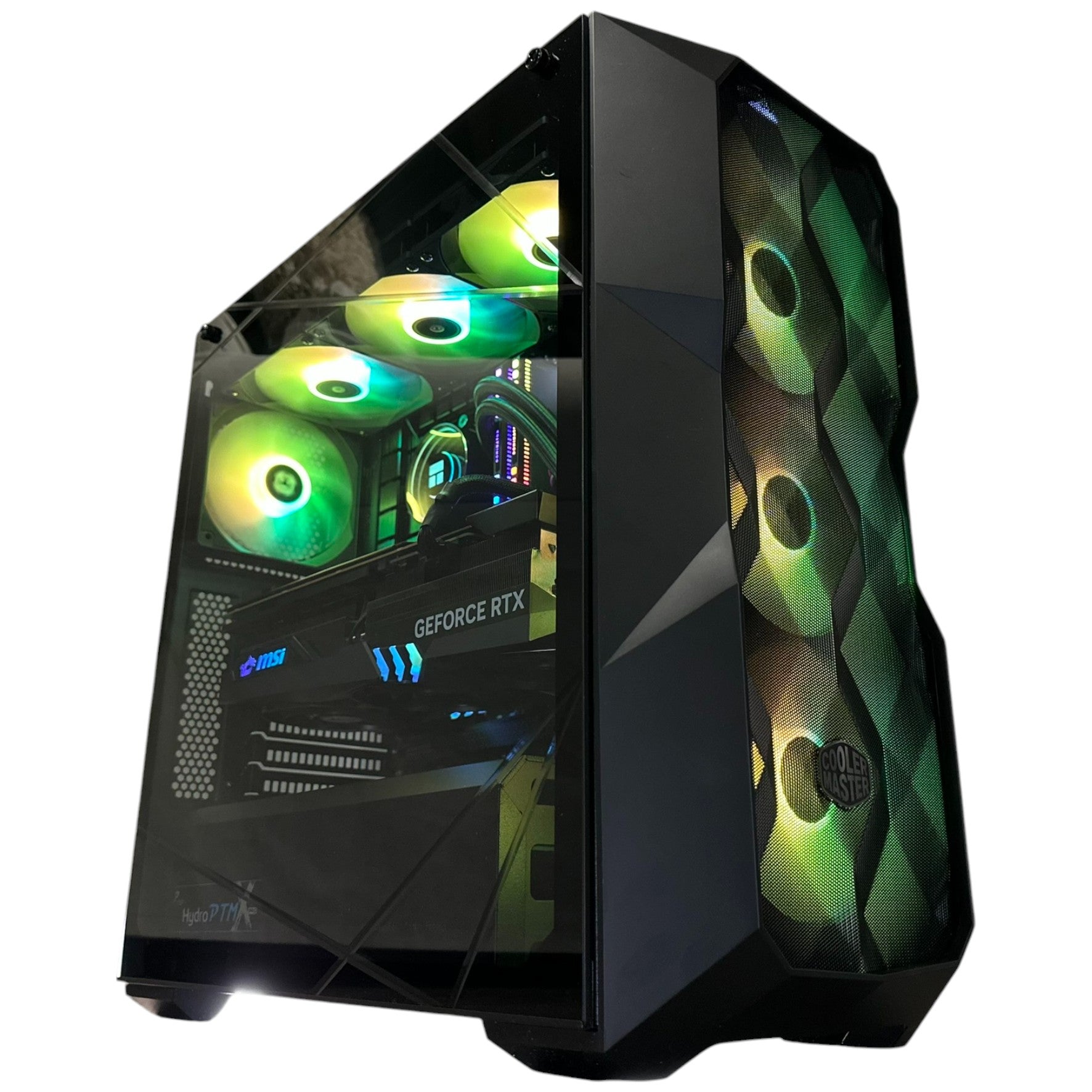
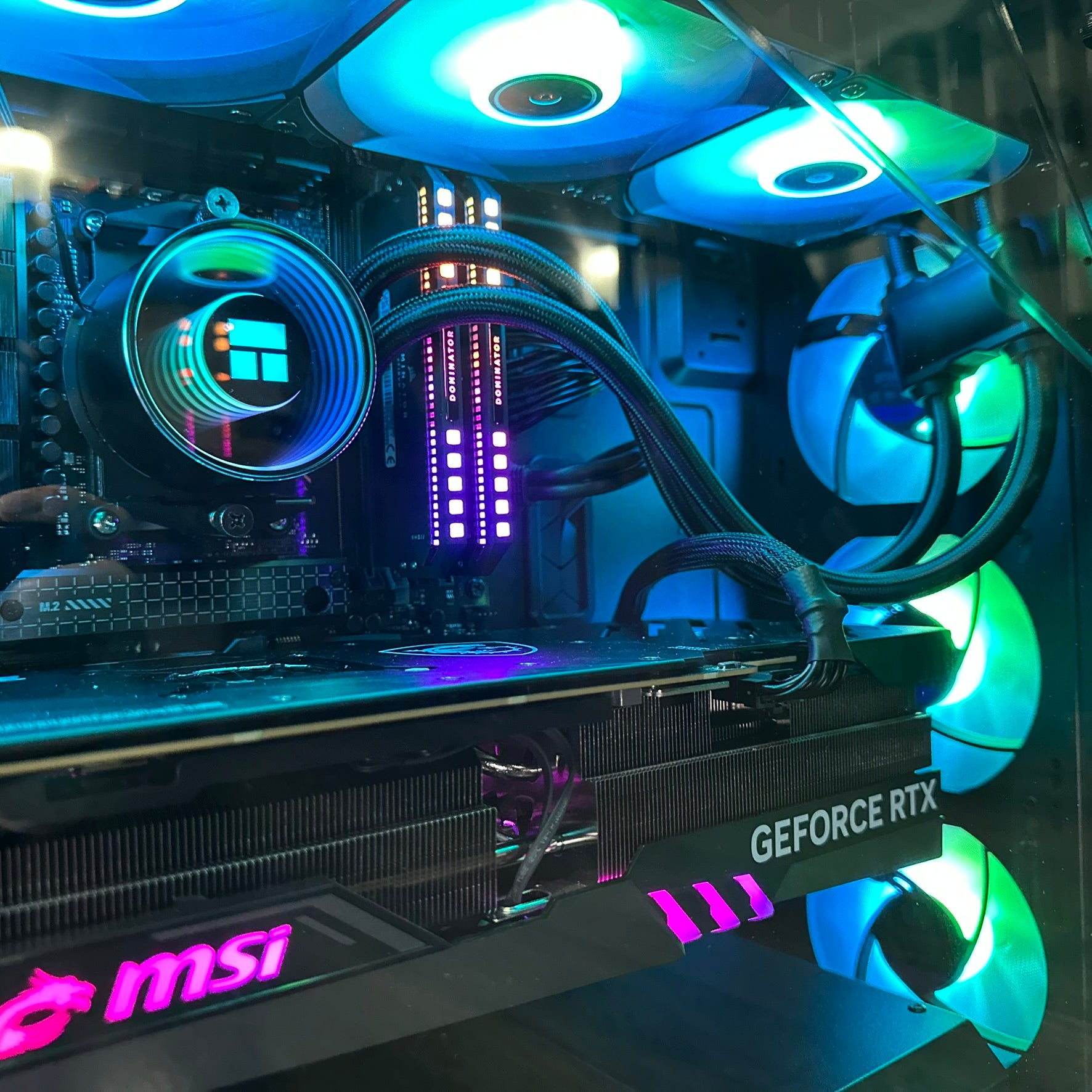
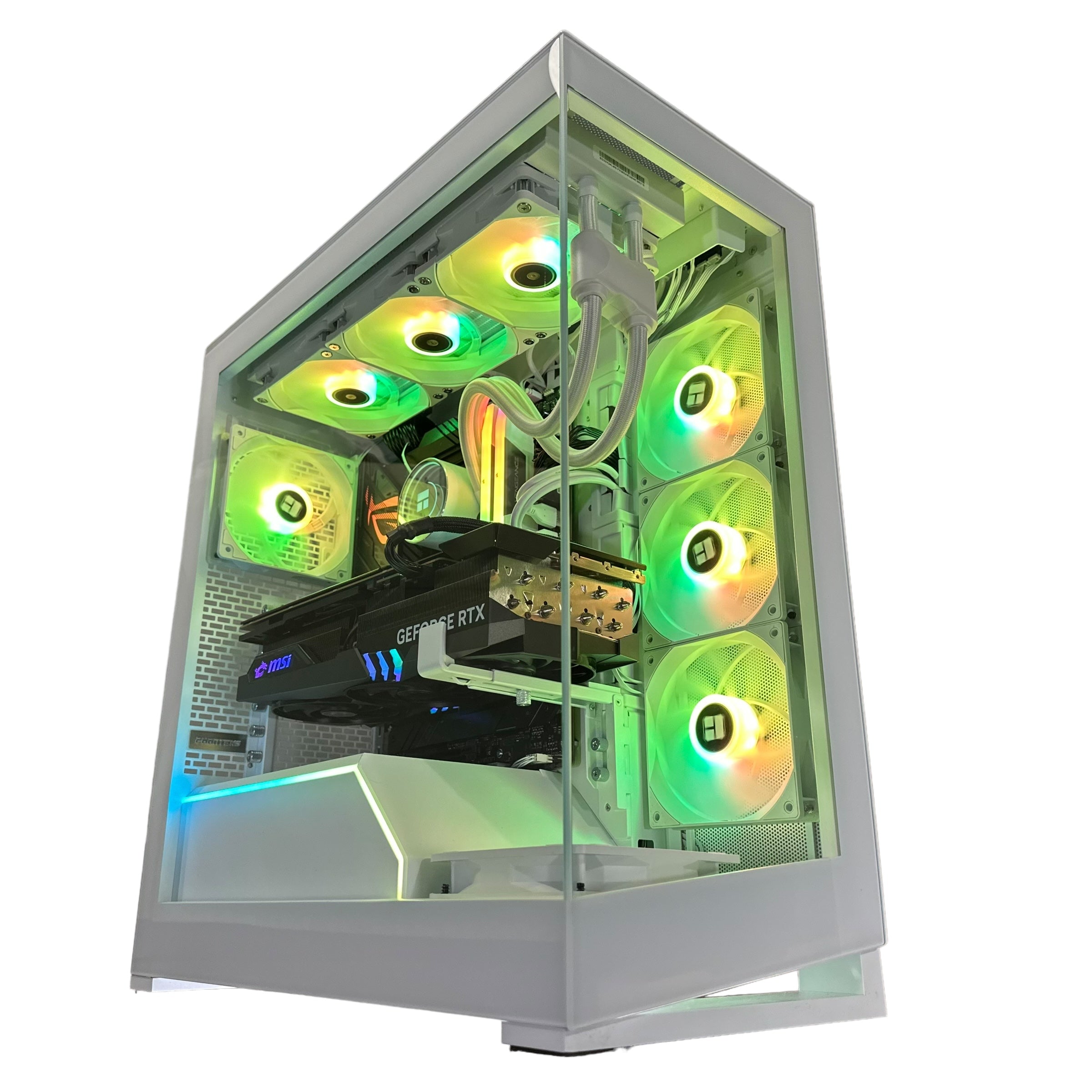
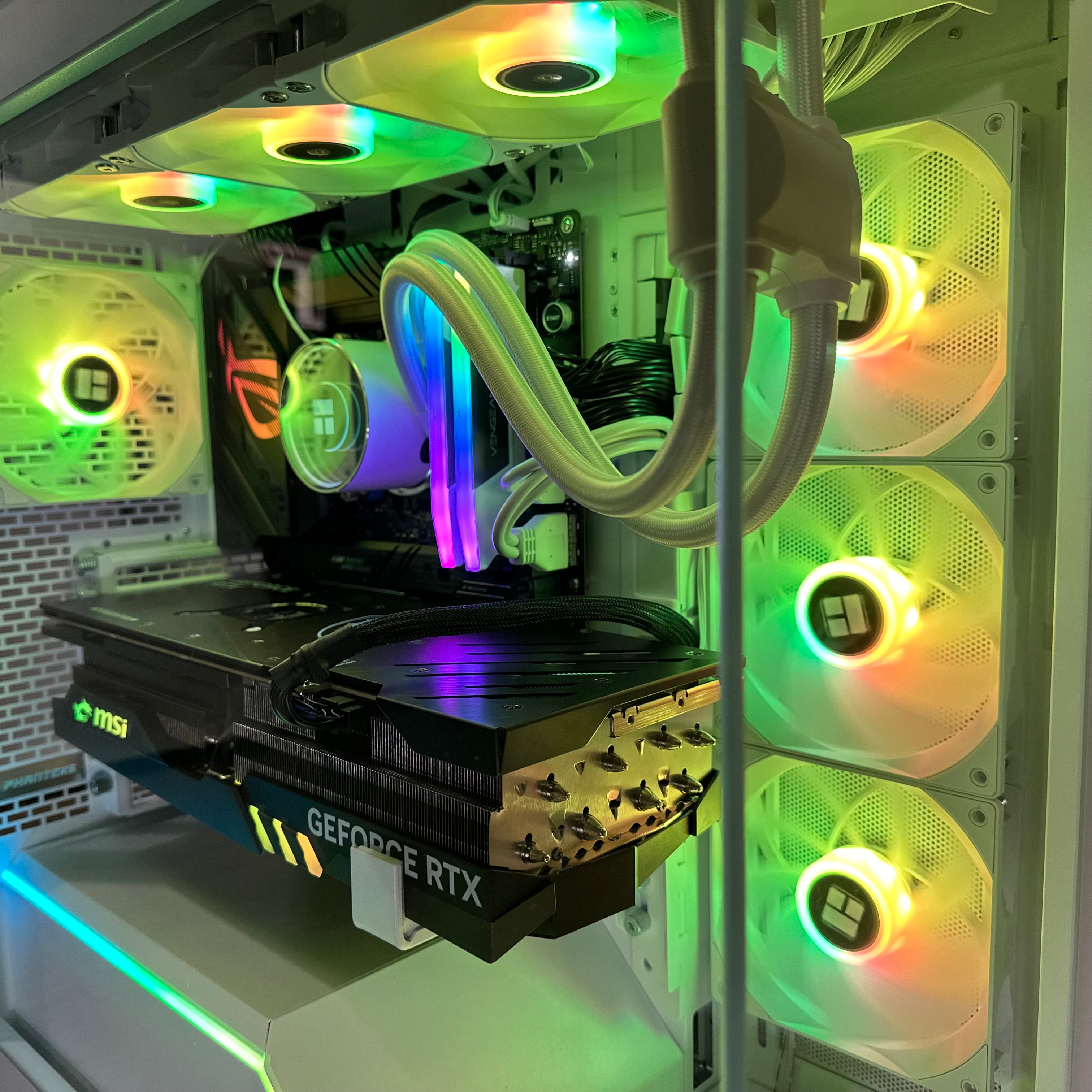
I've been building and selling gaming PCs for years here at Groovy Computers in Trenton, Nova Scotia. The NVIDIA GeForce RTX 4070 is one of the most popular cards we recommend for serious 1440p gaming without breaking the bank.
Today I'm breaking down everything you need to know about the RTX 4070's specs and what they mean for your gaming experience.
Key Takeaway
- 5,888 CUDA cores powered by Ada Lovelace architecture deliver excellent performance for 1440p gaming
- 12GB GDDR6X VRAM on a 192-bit bus handles modern games comfortably at high settings
- 200W TDP makes this one of the most power-efficient high-performance GPUs available
- Third-generation RT cores provide strong ray tracing performance with minimal fps hit
- DLSS 3 support with frame generation can nearly double framerates in supported games
- Launches at $599 USD positioning it as a solid mid-to-high tier option
- Real-world gaming shows 100+ fps at 1440p in most modern titles
Understanding the RTX 4070's Core Architecture
The RTX 4070 is built on NVIDIA's Ada Lovelace architecture using the AD104 GPU die. This is a 5nm chip made by TSMC that packs 35.8 billion transistors into a 294.5 square millimeter die.
What does that mean for you? It means this GPU is built on cutting-edge technology that delivers way more performance per watt than older cards.
The card has 5,888 CUDA cores spread across 46 streaming multiprocessors. These handle all your shader work and general graphics processing.
The RTX 3070 from the previous generation also had 5,888 CUDA cores, but the RTX 4070 performs considerably better because each core is more efficient and the whole architecture is redesigned.
Clock speeds range from 1,920 MHz base to 2,475 MHz boost. In real world use, we've seen these cards easily hit 2,700 MHz when temps are good.
The improvements don't stop at raw cores. Each streaming multiprocessor delivers up to twice the performance and power efficiency compared to the older Ampere cards.
Memory Configuration and VRAM Details
The RTX 4070 comes with 12GB of GDDR6X memory running at 21 Gbps across a 192-bit memory interface. This gives you 504 GB/s of total memory bandwidth.
Some people worried about the 192-bit bus being narrower than the RTX 3070's 256-bit interface. On paper it looks like a downgrade.
Here's the thing, though – NVIDIA made up for it by increasing the L2 cache from 4MB to 36MB. That's a 9x increase.
This huge cache means the GPU doesn't need to access VRAM as often. In practice, the 192-bit bus performs just as well as wider buses in most gaming scenarios.
The 12GB VRAM capacity is the sweet spot for 1440p gaming right now. According to testing from multiple reviewers, 12GB handles virtually every current game at 1440p with maximum settings and ray tracing enabled.
At 4K things get tighter. A few extremely demanding titles with path tracing can push past 12GB. But for the RTX 4070's performance level, you'd typically use DLSS at 4K anyway which reduces VRAM usage.
There's also a GDDR6 variant of the RTX 4070 that launched in August 2024. It uses standard GDDR6 at 20 Gbps instead of GDDR6X at 21 Gbps. This reduces bandwidth from 504 GB/s to 480 GB/s.
Testing showed the GDDR6 version performs about 1% slower on average. Not a huge difference, but something to check when buying.
Ray Tracing and AI Acceleration Specs
The RTX 4070 packs 46 third-generation RT cores for ray tracing. These are a big upgrade over second-gen RT cores.
NVIDIA rates these at 67 RT-TFLOPS. More importantly, they include new features like Opacity Micro-Maps and Displaced Micro-Mesh engines.
These technologies speed up ray tracing of complex geometry like foliage and fences. In some scenarios they can double RT performance.
Real world testing shows the RTX 4070 delivering 10-15% better ray tracing performance than even the previous gen RTX 3080. That's impressive for a lower tier card.
For AI workloads, you get 184 fourth-generation Tensor cores delivering 466 tensor-TFLOPS. These handle DLSS upscaling and the new DLSS 3 frame generation.
DLSS 3 is a game changer. It uses AI to generate entirely new frames between rendered frames. In titles like Cyberpunk 2077, it can nearly double your framerate.
The catch is DLSS 3 frame generation only works on RTX 40 series cards. It needs the optical flow accelerator hardware that's new to Ada Lovelace.
One test showed A Plague Tale going from 64 fps native to 125 fps with DLSS 3 enabled at 1440p. That's a 95% improvement.
Power Consumption and Thermal Design
The RTX 4070 has a Total Graphics Power of 200W. This is lower than the RTX 3070's 220W despite being faster.
NVIDIA officially recommends a 650W power supply for most systems. If you're running a high-end CPU like an i9 or Ryzen 9, go with 750W to be safe.
We've built hundreds of systems at Groovy Computers and 650W works great for typical builds. Don't cheap out on PSU quality though.
The card uses a single 12VHPWR connector on the Founders Edition. Many board partner cards use dual 8-pin PCIe connectors instead for wider compatibility.
Real world power draw during gaming sits around 175-192W depending on the game. Idle power is just 10W and video playback draws about 16W.
The efficiency is seriously impressive. The RTX 4070 often matches or beats the RTX 3080 in performance while using nearly half the power.
Temperature-wise, the Founders Edition runs in the 60-70°C range during gaming. Custom cards vary from 64°C on the coolest models to 72°C on warmer budget designs.
The low power means quieter operation. Most RTX 4070 cards barely make noise during gaming since the coolers don't need to work hard for 200W.
We've had customers tell us they love how quiet their RTX 4070 builds are compared to their old 300W+ GPUs.
Gaming Performance Across Resolutions
At 1080p, the RTX 4070 is overkill for most games. You're looking at 300+ fps in esports titles and well over 100 fps in demanding AAA games.
The sweet spot is definitely 1440p. This is where the RTX 4070 was designed to shine.
Testing across 13 games at 1440p showed an average of 126 fps. That includes demanding titles, not just easy-to-run games.
In Shadow of the Tomb Raider at 1440p, the card hit 139 fps. In F1 23 with ray tracing enabled, it delivered 90 fps.
Cyberpunk 2077 is always the torture test. At 1440p the RTX 4070 managed 80 fps, which is totally playable. Enable DLSS Quality mode and you're well over 100 fps.
For 4K gaming, you'll want to use DLSS in most titles. Native 4K typically delivers 50-70 fps in modern games.
Turn on DLSS Quality at 4K though and performance jumps up. Cyberpunk went from 28 fps native to 56 fps with DLSS Quality – that's a solid playable experience.
The RTX 4070 compares really well against competing cards. It ties the AMD RX 6800 XT in overall gaming performance while crushing it in ray tracing.
Against NVIDIA's own lineup, it roughly matches the previous gen RTX 3080 while using way less power and costing less.
RTX 4070 vs RTX 4070 Super
NVIDIA launched the RTX 4070 Super in January 2024 at the same $599 price point. This is important to know.
The Super variant bumps CUDA cores from 5,888 to 7,168 – a 22% increase in shader power.
It also increases memory bandwidth and expands L2 cache from 36MB to 48MB. TDP goes up slightly from 200W to 220W.
Real world performance shows the Super is about 15-18% faster across most games. At the same price, it's the better buy.
If you're shopping for a new RTX 4070, definitely look for Super models unless you find a really good deal on the original.
We still sell both at Groovy Computers because they're both great cards, but when prices are equal, Super is the way to go.
What the Specs Mean for Different Use Cases
For 1440p gaming at high refresh rates like 144Hz or 165Hz, the RTX 4070 specs are nearly perfect. You'll max out most games and maintain high framerates.
If you're into competitive gaming, this card crushes it. Counter-Strike 2 runs at 300+ fps. Valorant easily maintains 240+ fps for those high refresh monitors.
Ray tracing fans will appreciate the third-gen RT cores. You can enable RT features in most games and still maintain 60+ fps with DLSS.
For content creators, the 12GB VRAM handles 1080p and 1440p video editing well. The NVENC encoder supports AV1 for high quality streaming. If you're looking for a dedicated video editing PC, the RTX 4070 provides excellent acceleration for rendering and encoding tasks.
The 200W TDP is a huge win for small form factor builds. You can build a powerful compact PC without crazy cooling requirements.
Power efficiency also matters long term. Lower power means lower electricity bills and less strain on your components over years of use.
Board Partner Variations and Custom Models
The Founders Edition from NVIDIA measures 224mm long and takes up two slots. It fits easily in most mid-tower cases.
Custom cards vary widely. Some compact models stay around 224mm. Premium cards like the ASUS ROG Strix can stretch to 267mm or more.
Cooling solutions make a big difference in real world performance. Better coolers sustain higher boost clocks longer.
Testing of 46 different RTX 4070 models showed premium cards with 8-phase VRMs delivering 400+ amps. Budget models use 6-phase designs at 300 amps.
For most users the reference spec is fine, but enthusiasts who overclock benefit from the beefier power delivery on premium models.
Noise levels vary quite a bit. The Founders Edition runs at 39.7 dB during gaming. Some budget cards hit 42.7 dB or higher under load.
At Groovy Computers we usually stock mid-range board partner cards that balance price and performance well.
Display Outputs and Connectivity
The RTX 4070 has three DisplayPort 1.4a outputs and one HDMI 2.1a port. You can run up to four displays at once.
DisplayPort 1.4a supports 4K at 240Hz with Display Stream Compression. That's more than enough for current gaming monitors.
HDMI 2.1a delivers 48 Gbps bandwidth for 4K 120Hz with full RGB color – perfect for gaming on OLED TVs.
The card supports G-SYNC and G-SYNC Compatible monitors for tear-free variable refresh rate gaming.
One limitation is no DisplayPort 2.0. This isn't a big deal now but might matter for future ultra high refresh 4K monitors.
For multi-monitor setups, the RTX 4070 easily drives three 1440p 144Hz displays while gaming on the primary screen.
Overclocking Headroom and Tuning
The RTX 4070 has decent overclocking potential. Typical core overclocks of +150 MHz are achievable with good cooling.
Memory can usually handle +1000 MHz on the effective speed. This brings real performance gains of 7-10% in games.
The interesting thing is undervolting works really well too. You can drop voltage from 1.100V to 0.950V while maintaining performance.
This reduces power consumption from 190W to around 140W. Temperatures drop from mid-60s to mid-50s during gaming.
I recommend undervolting over overclocking for most users. You get quieter operation and better longevity with basically no performance loss.
The 200W TDP leaves headroom, but the card already boosts hard out of the box. Manual tuning gives diminishing returns.
Premium models with better VRMs can sustain higher power limits for extreme overclocking, though even budget cards handle moderate OC fine.
PCIe Bandwidth and System Requirements
The RTX 4070 uses a PCIe 4.0 x16 interface providing 31.5 GB/s bidirectional bandwidth.
Testing showed no performance difference between PCIe 5.0 and 4.0. Even PCIe 3.0 x16 loses only 1-2% in most games.
A few titles are more bandwidth sensitive. Counter-Strike 2 at 1080p showed an 11% drop on PCIe 3.0, but this gap narrows at higher resolutions.
Resizable BAR should be enabled if your system supports it. This can provide 0-5% performance improvements in most games.
Some titles like Far Cry 6 see bigger gains of 11-18% with Resizable BAR enabled.
The card works fine in older PCIe 3.0 systems. You don't need the latest motherboard to get good performance.
Long-Term Value and Future-Proofing
The 12GB VRAM should be adequate for 1440p gaming throughout the PS5 console generation. That's at least 3-4 more years.
PC ports sometimes use more VRAM than consoles suggest, but 12GB provides comfortable headroom for the RTX 4070's performance level.
DLSS 3 frame generation is a huge longevity advantage. As games get more demanding, frame generation can keep framerates playable.
Third-gen RT cores and the overall Ada architecture will age well. Games optimize for current-gen features over time.
The 200W power efficiency means this card will remain practical even as electricity costs rise.
Driver support will continue for years. NVIDIA typically optimizes drivers for current and previous gen cards for 3-4 years minimum.
For most gamers buying an RTX 4070 today, I'd expect it to deliver good 1440p performance through 2027-2028 easily. If you're ready to build a complete system around this GPU, check out our selection of gaming PCs featuring the RTX 4070 and other high-performance graphics cards.
Frequently Asked Questions
What is the TDP of the RTX 4070?
The RTX 4070 has a Total Graphics Power (TDP) of 200W. Real world power consumption during gaming typically ranges from 175-192W depending on the game, making it one of the most power-efficient high-performance GPUs available. NVIDIA recommends a 650W power supply for most systems, or 750W if you're using a high-end CPU.
How much VRAM does the RTX 4070 have?
The RTX 4070 comes with 12GB of GDDR6X memory running at 21 Gbps across a 192-bit memory interface, delivering 504 GB/s of bandwidth. There's also a GDDR6 variant with 12GB at 20 Gbps providing 480 GB/s bandwidth, which performs about 1% slower on average. The 12GB capacity is well-suited for 1440p gaming and most 4K scenarios with DLSS enabled.
What are the CUDA core specifications for the RTX 4070?
The RTX 4070 features 5,888 CUDA cores organized across 46 streaming multiprocessors built on NVIDIA's Ada Lovelace architecture. It also includes 46 third-generation RT cores for ray tracing and 184 fourth-generation Tensor cores for AI acceleration, with clock speeds ranging from 1,920 MHz base to 2,475 MHz boost (often reaching 2,700 MHz in real-world use).
Is the RTX 4070 good for 1440p gaming?
Yes, the RTX 4070 is excellent for 1440p gaming with testing showing an average of 126 fps across modern titles at high settings. It delivers 100+ fps in most AAA games and 300+ fps in competitive esports titles at this resolution. The 12GB VRAM and strong ray tracing performance make it ideal for high-refresh 1440p monitors running at 144Hz or 165Hz. We offer several mid-tier gaming PCs that pair perfectly with the RTX 4070 for 1440p gaming.
How does the RTX 4070 compare to the RTX 3080?
The RTX 4070 roughly matches or slightly exceeds the RTX 3080 in gaming performance despite having fewer CUDA cores, while consuming nearly half the power (200W vs 320W). It offers 2GB more VRAM (12GB vs 10GB) and includes DLSS 3 frame generation support that the RTX 3080 lacks. The RTX 4070 also delivers 10-15% better ray tracing performance thanks to its third-generation RT cores. You can explore our RTX 3080 10GB collection to compare builds and pricing.
What's the difference between RTX 4070 and RTX 4070 Super?
The RTX 4070 Super increases CUDA cores from 5,888 to 7,168 (22% more), boosts memory bandwidth, expands L2 cache from 36MB to 48MB, and raises TDP from 200W to 220W. This translates to approximately 15-18% higher gaming performance across most titles. Both launched at the same $599 price point, making the Super the better value when prices are equal.
Does the RTX 4070 support DLSS 3?
Yes, the RTX 4070 fully supports DLSS 3 including frame generation, which uses AI to create entirely new frames between traditionally rendered frames. Testing shows DLSS 3 can improve performance by 50-100% in supported titles, with games like A Plague Tale: Requiem jumping from 64 fps native to 125 fps at 1440p. This feature requires the optical flow accelerator hardware exclusive to RTX 40 series cards.
What power supply do I need for an RTX 4070?
NVIDIA officially recommends a 650W power supply for RTX 4070 systems with mainstream CPUs like Intel Core i5 or AMD Ryzen 5 processors. If you're pairing it with high-end CPUs like Intel Core i9 or AMD Ryzen 9 that draw 150W+ during gaming, consider a 750W unit to maintain adequate headroom for power spikes and system longevity. Check out our i5-12600KF gaming PC or Ryzen 7 7800X3D gaming PC builds that pair perfectly with the RTX 4070.

Leave a comment
This site is protected by hCaptcha and the hCaptcha Privacy Policy and Terms of Service apply.